Interesting things always happen, when I invest quality time in exploring the Web. I find all sorts of fascinating material to ponder. And Twitter has been a real boon, in that regard. My thought process would not be the same without it, it’s fair to say, since I’d have access to a lot fewer ideas that are normally well out of reach of my solitary life.
About a year ago, I was on Twitter and caught sight of a call for papers for a conference in Antwerp entitled “Perceiving at a Distance“.
It looked fascinating. They had a great website (perceiving.at – find it now at the Wayback Machine). And there was all sorts of intriguing thought-material to “chew” on in my spare time (commuting, washing dishes, waiting for SQL queries to resolve).
I’d already been working with some ideas around perception, proximity, and distance, myself, so naturally I was intrigued to discover that — indeed — there’s a whole flock of folks who are engaged in philosophies of perception. And there was a whole conference about Perceiving at a Distance. Woot!
It got me thinking some more. A lot more.
It seemed to “conceptually bolt on” to another object of my contemplation, which has practically haunted me, since I first realized it, a few years back. Namely:
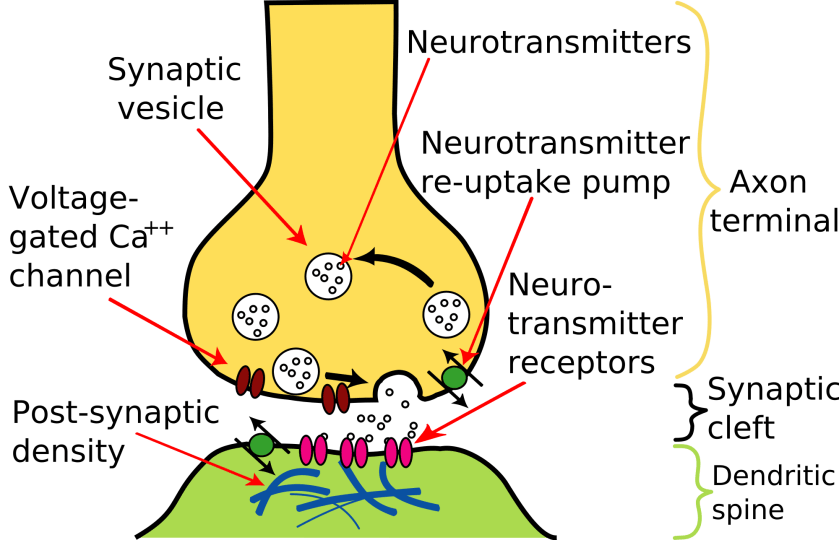
In all the 150 trillion (give or take) neural synapses we have in our brains, there’s actually no direct connection between the axons (presynaptic terminals) and the dendrites (post-synaptic terminals). In fact, synapses by their very definition, are not direct connections, rather a sort of “chemical bridge” for data to cross. In the illustration above, you can see a very small gap between the two parts of the connecting neurons. It’s minuscule, but it’s there.
And now there was a conference of philosophy about perceiving at a distance.
It got me thinking…
And it got me writing.
There’s a book in the works about this — and there’s even more to it, than I initially thought.
Speak to me not
of lost chances
and dashed hopes.
Dwell not
on opportunities seen
too late, then
passed over in the rush for more blatant,
immediate gratification.
Sing to me no songs
of remorse
over loves untended,
passions unkindled,
when the world smothered
the wayward sparks of your youth with the march
of police and dogs, and a series
of concurrent overdoses and
assassinations
that robbed you of your palpable hope.
No, tell me no stories
of folly and failure, don’t describe
how it all might have been
different.
Instead —
speak to me of the hopes that once
were, and will be
all over again.
Tell me how your unslaked thirst
drove you on past mirages
to drink at the waiting oasis.
Dwell on the fact that opportunity
did knock, once upon a time.
And hold precious your fantasies
of what never was — sweeter, to be sure,
than what truly could have been.
The last two dreams I posted have had a lot of significance for me.
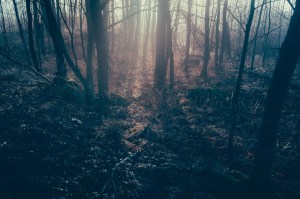
“Digging Deep” is very much about digging into the unseen regions of our lives — our psyches, our pasts, our histories… the things and experiences and thoughts and feelings we have buried, in hopes of never finding them again. It’s about taking a deep breath and plunging in, to see what’s there.
Even if it makes us feel sick.
Even if it frightens us.
When we dig, we can find amazing things.
The old woman by my side represents to me the generations up on generations of others who have gone before us, who have done that work — and lived to tell the tale. They speak to us from their silenced experiences, to remind us — it’s okay. Keep digging.
Digging for what? For the things that we crave… the things that will make us whole. For the things we have pushed away from us, thinking they are too frightening or uncomfortable or even useless, to be much good to us now.
That dream was an excellent reminder, and it gave me a much-needed boost in a time when I needed it. Funny… my dreams often do that.
“Reclaiming the Castle” also gave me an incredible boost, at a time when I was doing my best not to lose my cool at a job that was financially necessary, but just murder on my self-esteem. The little software company where I’d written and managed a full documentation set had gotten “dot-bombed” about a decade before everyone else, and I had to take an admin job in the HR department of a major multi-national tech company. Talk about lousy gigs… it was not my finest year. (Then again, it did provide excellent experience, and I ended up turning that sow’s ear into a major silk purse full of money, so it wasn’t a total waste.)
At the time when “Reclaiming the Castle” came to me, I was meditating regularly. This was around 1994, and I’d just found out about sitting zazen (where you sit motionless and just “be” for extended periods of time). I was also discovering and diving into the works of medieval European women mystics, and liking what I found. Their works meshed nicely with my lifelong fascination with the Holy Grail mythos, and I found traces of that long-beloved mythology in their words.
One of the things that struck me, as I was sitting zazen and reading up on women mystics, was that I was combining traditions from East and West in ways that really complimented each other. At that time, I recall coming across an increasing body of work by Western writers about Eastern spiritual practices. And I discovered some books that connected both ends of the spiritual practice into a continuous spectrum.
One thing that struck me, however, was an apparent assumption that Eastern practices are somehow better or more elevated than Western ones. Yoga and meditation and Buddhism were all very popular in the area where Laney and I lived at the time, and there was no lack of talk and instruction on them. And somehow, it seemed that underneath all the instruction was an all-too-eager genuflection to the East — where you can reallyget enlightened, not just pass your time in a consumption-driven, manic-depressive haze till you drop dead in our industrial, spiritually dessicated wasteland.
And that troubled me.
Because I knew — from my own personal experience — that the Western tradition is anything but spiritually dessicated. Sure, a lot of Westerners have abandoned their faith and their spiritual practices, and there’s been a sh*t-ton of oppression and bloodshed by the Powers That Be to keep people in line with their religion. But the apparent belief that the West has little to offer in the way of enlightenment and spiritual connection seemed, well, fundamentally flawed.
And it struck me that people were really looking in the wrong place (and faulting the wrong things), in hopes of finding their way to the Light they needed.
It seemed to me — then, and now — that the real source of our despair, our sense of desolation, is that we’ve abandoned our own indigenous paths to Light. We’ve gotten our fill of the standard-issue religious structures, we’ve witnessed the abuses of power and the overthrow of authenticity, and we’ve decided to reject the whole lot. We look elsewhere for answers — never realizing that the fact that we’re not actually “getting” what they offer. Eastern traditions originate elsewhere — from languages and cultures and historical contexts completely different from our own Western ways.
And because of that, we’re never going to fully understand what they mean.
Our translations are flawed — in word and deed — but of course, we never realize it, because we’re the ones doing the translating. Our modes of practice are necessarily going to be completely different in substance and nature from those of the originators. Our measures of whether we’re “getting it” or not are going to be skewed, because what we seek may actually not be what those practices are actually offering.
But because we’re so hungry, so determined, so needy of these things — which are part and parcel of any complete life — we don’t see it.
And in chasing after those “otherly” ways, we lose our connection with our own histories, our own practices, our own paths. That just separates us all the more from what we seek — a sense of connection, a sense of belonging.
“Reclaiming the Castle” to me is really about that conflict. Patrick Stewart, to me, represents our Western impulse to boldly go where no one has gone before, and in the process, leaving behind a connection with a valuable, anchoring past. He’s a technological sage, a hyper-modern character, and he is desperately lonely and sad. His soul is depleted, and he knows it.
And he says so. To me, his opinion that herbalists are “the real thing” is a parallel with the parts of our modern selves that look to ways which are more connected with the natural world for relief and solace. “Herbs” can equate with anything in our modern lives that isn’t manufactured, marketed, and tracked. They can be the equivalent of anything we associate with more natural, less artificial approaches to life. Look at all the dollars spent on alternative healthcare and healing modalities. Look at all the money spent on supplements, herbs, and various forms of yoga, not to mention DNA analysis and ancestry research. They’re both connected, as very real needs in the population for approaches that connect us with our own health and well-being, as well as our history.
We know our history is there… we just have to uncover it
“Reclaiming the Castle” isn’t just a treatise in favor of herbalists. It’s a metaphor about how we actually feel about our place(s) in the world — and what we think will save us. And it’s about how, deep within the symbolic forest of the unseen and nearly-forgotten aspects of our lives, we can actually find something there that will bring us back to ourselves.
That dream was an elaboration on “Digging Deep” — it showed me what can come, when we don’t shy away from our past, when we truly excavate the traditions and practices of those who passed our DNA along to us. I believe that we inherit the orientations, capacities, and capabilities of our ancestors. And I believe that our spiritual practices and traditions become all the more meaningful and potent, when they are aligned with our heritage.
Of course, our Western heritage reaches far, far back… much farther back than the version we’ve been living with for the past 1,500 years or so (give or take). And when we do connect with that — as I did, through exploring ancient women’s mythology, as well as the words of medieval women mystics — the change it can bring to us… well, that’s nothing short of miraculous.
May you dig — and dive — deep. And find all you need… and more.
In a dream, I followed a woman down a street. I knew and respected her in real life, and she was actually something of a role model for me, as one of the most independent women I knew. I tried to catch up with her as we went down the street, but she was always a step or two ahead of me and wasn’t even aware I was following her. Just as I was about to catch up with her, she suddenly turned and went into a house.
The house was an old, white, 2-story Victorian – very ornate, with gingerbread all around the porch, white marble stairs rose up from the street, and a door with very intricately etched glass windowpanes. Inside, it was dark, but as my eyes adjusted, I could make out many, many rooms and a wide staircase that spiralled upwards from the middle of the entryway. The rooms were filled with flowing draperies – sheers, white – that wafted to and fro on a breeze. The whole house was shadowy and filled with women – all of them considerably older than I.
The woman I was following marched right into the house and up the staircase. I tried to catch up with her, but she was ahead of me and out of sight very soon. I looked in each room, trying to locate her, but was only met with the sight of other older women.
Some were middle-aged, talking in pairs and threes. Others, very elderly, white-haried, sat silently, looking out the windows or just meditating. I stumbled up the staircase, looking for my role model, but she was gone. I tiptoed into some of the rooms, following them around to see where they led, but I got confused and ended up in dead ends, with white pillows and drapes all around, confusing me. I tried to stay calm and not panic, but I was frightened and wished I could find the woman I was looking for.
In and out of rooms I went, and the older women there either ignored me totally or eyed me curiously, without saying a word. I tried to approach two women, sitting on a window seat, talking quietly with one another, but when I approached them, they were distant and barely polite. I seemed not to belong there, and I knew it – but I had to find the woman I was following.
I looked around, and I thought I caught sight of her on the staircase, which was visible from nearly every room in the house. I hustled to the landing and looked up, then down, but I only saw sheers drifting to and fro. Frustrated and confused, I decided I’d had enough. I started down the staircase toward the front door to leave. With that, my dream ended.

 The last two dreams I posted have had a lot of significance for me.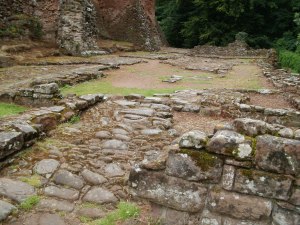

 kayLorraine