When you get down to it… Where do we find our answers?

dark-forest-dreamThe last two dreams I posted have had a lot of significance for me.

Digging Deep” is very much about digging into the unseen regions of our lives — our psyches, our pasts, our histories… the things and experiences and thoughts and feelings we have buried, in hopes of never finding them again. It’s about taking a deep breath and plunging in, to see what’s there.

Even if it makes us feel sick.

Even if it frightens us.

When we dig, we can find amazing things.

The old woman by my side represents to me the generations up on generations of others who have gone before us, who have done that work — and lived to tell the tale.  They speak to us from their silenced experiences, to remind us — it’s okay. Keep digging.

Digging for what? For the things that we crave… the things that will make us whole. For the things we have pushed away from us, thinking they are too frightening or uncomfortable or even useless, to be much good to us now.

That dream was an excellent reminder, and it gave me a much-needed boost in a time when I needed it. Funny… my dreams often do that.

Reclaiming the Castle” also gave me an incredible boost, at a time when I was doing my best not to lose my cool at a job that was financially necessary, but just murder on my self-esteem. The little software company where I’d written and managed a full documentation set had gotten “dot-bombed” about a decade before everyone else, and I had to take an admin job in the HR department of a major multi-national tech company. Talk about lousy gigs… it was not my finest year. (Then again, it did provide excellent experience, and I ended up turning that sow’s ear into a major silk purse full of money, so it wasn’t a total waste.)

At the time when “Reclaiming the Castle” came to me, I was meditating regularly.  This was around 1994, and I’d just found out about sitting zazen (where you sit motionless and just “be” for extended periods of time). I was also discovering and diving into the works of medieval European women mystics, and liking what I found. Their works meshed nicely with my lifelong fascination with the Holy Grail mythos, and I found traces of that long-beloved mythology in their words.

One of the things that struck me, as I was sitting zazen and reading up on women mystics, was that I was combining traditions from East and West in ways that really complimented each other. At that time, I recall coming across an increasing body of work by  Western writers about Eastern spiritual practices. And I discovered some books that connected both ends of the spiritual practice into a continuous spectrum.

One thing that struck me, however, was an apparent assumption that Eastern practices are somehow better or more elevated than Western ones.  Yoga and meditation and Buddhism were all very popular in the area where Laney and I lived at the time, and there was no lack of talk and instruction on them. And somehow, it seemed that underneath all the instruction was an all-too-eager genuflection to the East — where you can really get enlightened, not just pass your time in a consumption-driven, manic-depressive haze till you drop dead in our industrial, spiritually dessicated wasteland.

And that troubled me.

Because I knew — from my own personal experience — that the Western tradition is anything but spiritually dessicated. Sure, a lot of Westerners have abandoned their faith and their spiritual practices, and there’s been a sh*t-ton of oppression and bloodshed by the Powers That Be to keep people in line with their religion. But the apparent belief that the West has little to offer in the way of enlightenment and spiritual connection seemed, well, fundamentally flawed.

And it struck me that people were really looking in the wrong place (and faulting the wrong things), in hopes of finding their way to the Light they  needed.

It seemed to me — then, and now — that the real source of our despair, our sense of desolation, is that we’ve abandoned our own indigenous paths to Light. We’ve gotten our fill of the standard-issue religious structures, we’ve witnessed the abuses of power and the overthrow of authenticity, and we’ve decided to reject the whole lot. We look elsewhere for answers — never realizing that the fact that we’re not actually “getting” what they offer. Eastern traditions originate elsewhere — from languages and cultures and historical contexts completely different from our own Western ways.

And because of that, we’re never going to fully understand what they mean.

Our translations are flawed — in word and deed — but of course, we never realize it, because we’re the ones doing the translating. Our modes of practice are necessarily going to be completely different in substance and nature from those of the originators. Our measures of whether we’re “getting it” or not are going to be skewed, because what we seek may actually not be what those practices are actually offering.

But because we’re so hungry, so determined, so needy of these things — which are part and parcel of any complete life — we don’t see it.

And in chasing after those “otherly” ways, we lose our connection with our own histories, our own practices, our own paths. That just separates us all the more from what we seek — a sense of connection, a sense of belonging.

Reclaiming the Castle” to me is really about that conflict. Patrick Stewart, to me, represents our Western impulse to boldly go where no one has gone before, and in the process, leaving behind a connection with a valuable, anchoring past. He’s a technological sage, a hyper-modern character, and he is desperately lonely and sad. His soul is depleted, and he knows it.

And he says so. To me, his opinion that herbalists are “the real thing” is a parallel with the parts of our modern selves that look to ways which are more connected with the natural world for relief and solace. “Herbs” can equate with anything in our modern lives that isn’t manufactured, marketed, and tracked. They can be the equivalent of anything we associate with more natural, less artificial approaches to life. Look at all the dollars spent on alternative healthcare and healing modalities. Look at all the money spent on supplements, herbs, and various forms of yoga, not to mention DNA analysis and ancestry research. They’re both connected, as very real needs in the population for approaches that connect us with our own health and well-being, as well as our history.
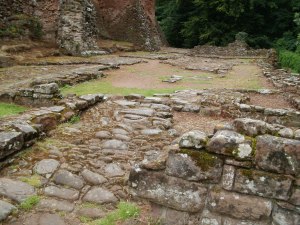
We know our history is there... we just have to uncover it
We know our history is there… we just have to uncover it

Reclaiming the Castle” isn’t just a treatise in favor of herbalists. It’s a metaphor about how we actually feel about our place(s) in the world — and what we think will save us. And it’s about how, deep within the symbolic forest of the unseen and nearly-forgotten aspects of our lives, we can actually find something there that will bring us back to ourselves.

That dream was an elaboration on “Digging Deep”  — it showed me what can come, when we don’t shy away from our past, when we truly excavate the traditions and practices of those who passed our DNA along to us. I believe that we inherit the orientations, capacities, and capabilities of our ancestors. And I believe that our spiritual practices and traditions become all the more meaningful and potent, when they are aligned with our heritage.

Of course, our Western heritage reaches far, far back… much farther back than the version we’ve been living with for the past 1,500 years or so (give or take). And when we do connect with that — as I did, through exploring ancient women’s mythology, as well as the words of medieval women mystics — the change it can bring to us… well, that’s nothing short of miraculous.

May you dig — and dive — deep. And find all you need… and more.
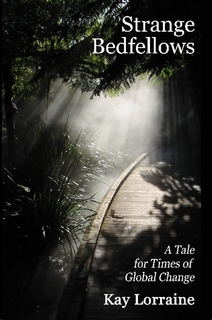
Strange Bedfellows – Foreword to the 2nd Edition

strange-bedfellows-cover-klIt’s now been over 20 years, since I had this dream in the upstairs loft of a pink house built not so far from my ancestral home. The story at first alarmed me with its scope and detail – who has dreams that are that vivid, that cohesive?

Then it intrigued me.

Then it annoyed me, as I tried to put it down on paper, only to find the pictures defying the use of words.

It took me years to finally get the story told. And all the while, it taught me many valuable lessons.

At first glance, this story might seem like a finger-wagging eco-warrior rant about the excesses of our toxic modern lives… our lust for luxury, our craving for comfort, and all the harm it does to Planet Earth. Indeed, when I awoke from this dream, all those years ago, that’s exactly what I thought it was: A wake-up call to alert us to Change Our Ways Before It’s Too Late… before our last chance to save the earth – and the human race – is gone forever.

And you wouldn’t be wrong to think that’s so. In a way, on the surface, it is very much about exactly that. We say we want to help the earth, but we make poor choices. We say we’re committed to change, but we set unrealistic and unwise priorities, and abandon them when we realize we can’t do it easily. We do things without thinking, and the world around us pays the price for our oblivion.

And yet, there’s something more to this story – something more enduring, something more global. It’s not just about a couple of spoiled, upwardly-mobile professionals who will stop at nothing to satiate their desires for success and luxury. It’s about much more than that. As you read the story in the coming pages, think beyond what’s on the surface. Look deeper into the behaviors and the choices that Paul and Christina make… and if you dare, look for signs of yourself in their shoes, making the same sorts of choices, for the same sorts of reasons, with the resulting consequences.

Your choices – our choices – needn’t only be about upward mobility, status, and prestige, to get us in trouble. They can be as seemingly innocuous as the decision to order takeout, instead of warming up leftovers. And abandoning our commitment to lasting change can be as casual as dismissing a set of New Year’s resolutions, because in February they’re just not as realistic (or fun) as they seemed back in December.

None of our choices are simple, these days. So many of them send ripples we cannot see into the world far beyond us. And it’s difficult to know how best to change course, and why. So, what better time to really think our choices through, really weigh the costs of committing to (or abandoning) them, than at this point in history?

Some say we’ve passed the turning point. I say we still have some turning left in us. But we have to be willing to turn – and stick with it.

The Voice of Night – A House Full of Women

I dreamed of a Victorian house...
I dreamed of a Victorian house…

In a dream, I followed a woman down a street. I knew and respected her in real life, and she was actually something of a role model for me, as one of the most independent women I knew. I tried to catch up with her as we went down the street, but she was always a step or two ahead of me and wasn’t even aware I was following her. Just as I was about to catch up with her, she suddenly turned and went into a house.

The house was an old, white, 2-story Victorian – very ornate, with gingerbread all around the porch, white marble stairs rose up from the street, and a door with very intricately etched glass windowpanes. Inside, it was dark, but as my eyes adjusted, I could make out many, many rooms and a wide staircase that spiralled upwards from the middle of the entryway. The rooms were filled with flowing draperies – sheers, white – that wafted to and fro on a breeze. The whole house was shadowy and filled with women – all of them considerably older than I.

The woman I was following marched right into the house and up the staircase. I tried to catch up with her, but she was ahead of me and out of sight very soon. I looked in each room, trying to locate her, but was only met with the sight of other older women.

Some were middle-aged, talking in pairs and threes. Others, very elderly, white-haried, sat silently, looking out the windows or just meditating. I stumbled up the staircase, looking for my role model, but she was gone. I tiptoed into some of the rooms, following them around to see where they led, but I got confused and ended up in dead ends, with white pillows and drapes all around, confusing me. I tried to stay calm and not panic, but I was frightened and wished I could find the woman I was looking for.

In and out of rooms I went, and the older women there either ignored me totally or eyed me curiously, without saying a word. I tried to approach two women, sitting on a window seat, talking quietly with one another, but when I approached them, they were distant and barely polite. I seemed not to belong there, and I knew it – but I had to find the woman I was following.

I looked around, and I thought I caught sight of her on the staircase, which was visible from nearly every room in the house. I hustled to the landing and looked up, then down, but I only saw sheers drifting to and fro. Frustrated and confused, I decided I’d had enough. I started down the staircase toward the front door to leave. With that, my dream ended.

The Voice of Night – Digging Deep

HermetiaillucensI dreamed one night that I was on my knees, digging in a luminously dark garden with a trowel. An old, wizened, white-haired woman knelt beside me on my right. All around me, it was dark, but yet light at the same time. There was a glow about the place that was both frightening and comforting.
As I dug into the loose, crumbling earth, I started uncovering mealy worms, little grey grubs, then longer worms that were white and blind. Thick and snakelike, they writhed in the hole I was digging and my stomach turned when I looked at them.

I was revolted. I wanted to drop my trowel and leave.

I thought of stopping, but the old woman crouched beside me said I should keep digging and not be afraid. I continued, quelling the churning of my stomach, and the worms got larger and wilder, the deeper I went. The old woman told me to put my hands in the hole I was digging, to run the ground and worms through my fingers. I soon saw that some of the creatures were snakes, and I was horrified, afraid to follow her instructions.

They’ll bite me, I thought fearfully, but I did as she told me. And when I put my hands into the hole, the snakes didn’t harm me. They hardly seemed to notice me, but only wriggled and writhed — never showed signs of attacking or biting me.

Fascinated and still a little afraid, for some time, I reached into the hole, came up with both hands full of earth and worms and snakes, watching them fall through my fingers and run between my palms. Now and then, a shiver would come over me and I’d think about stopping, but the old woman by my side told me not to be afraid, it was alright. I was fascinated by the sight of those creatures, still waiting for them to attack me, but I was never harmed by them. Before long, my fascination took over and I began to enjoy the feel of the snakes and worms and ground in my hands. After running the ground, worms and snakes through my hands for a while, I replaced them in the hole, covered it up, and looked around.

The old woman was gone.

The Voice of Night – Colonial Settlement

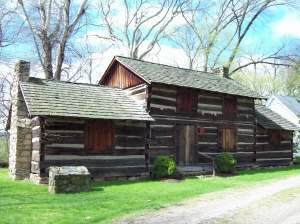
Ruffner_Log_House_Apr_09I lived in colonial times and was out on the frontier, living in a huge log common building in a settlement of white people. The building housed an eating and entertaining are on the ground floor, and lodging upstairs all around the periphery of the building. It was made of exposed pine logs with high ceilings and a walkway around the 2nd floor rooms that looked down into the common area. Far from being a saloon/brothel, the settlers were all Pilgrim types who gathered for hymn sings around the piano downstairs and had fellowship meetings around the long tables on the main floor. They were very white, very protestant/puritanical and very imperial.
As for me, I was considered a “white trash” woman, not good enough for their company. I lurked on the fringes of their common area, taking hand-outs of food and money from charitable settlers. On the periphery, there also lived a small tribe (members of a larger one) of Indians. They lived on the perimeter of the building under the eves in unfinished sections that were dark and dusty. they sold crafts and traded for food with the whites. Since I wasn’t welcome with the settlers, I took up company with the local natives and hung out with them, rolling dice, chatting, and eating and sleeping. They accepted me and adopted me unofficially into their group.

One day, part of the roof caught fire over in the finished section of the building. The whites were terror-stricken and rushed to get water. The local natives and I just watched – we were over in the unfinished wing, out of danger. I got nervous, but they showed me how the walls around us on our side were just tarp and animal skins. All we had to do, was lift the edge and slip out, and we’d be safe.

The fire spread down the wall across from us and we watched as the whites dashed to and fro, desperately trying to put out the fire. They hauled water in big wagons drawn by teams of draft horses, and made water brigades. They hustled to barricade the interior against the spreading fire. All was pandemonium, as they tried to save all their equipment and possessions from the fire. It kept spreading, tough, and soon they all had to flee their part of the building. The natives and I just watched the fire spread and consume the roof, the walls, the interior.

At last, we gathered our few things – blankets, bedrolls, a few eating utensils, and personal effects – together and ducked out under the edge of the tarp behind us. We climbed to the to of a little knoll and watched the whites scramble in vain as their common building burned to the ground.

The Voice of Night – I dreamed I was in a circus troupe…

circus-performanceI dreamed I was the administrative director of a traveling circus show with all the standard talents – the buxom blonde tightrope artiste/wild horse rider; the heavily muscled power lifter; the debonair lion tamer; the countless dwarfs and clowns and jugglers and acrobats. A hodge-podge group – a standard circus band.

And I dreamed that we had a huge show to put on somewhere. But we had to get there first. It was quite a prestigious thing – performing in front of all the right people – kings, queens, diplomats, socialites. If we could get there, we could put on quite a show. How to get there? I suggested a plane or a bus. But on one else would hear of it. A motor vehicle of some kind – any kind. To get us there in time. It was an important performance, and we didn’t dare miss it.

But they said, “No – camel caravan will do much better. The equipment is too bulky and we can’t stand being cooped up in there for so long – all of us together, when we drive each other crazy, as it is. We enjoy each other’s company, but…”

“It was an important engagement, though,” I countered. “We can’t afford to take any chances.” And I arranged for a plane to take us to our performance.

We herded onto the plane. The lady, the muscleman, the lion-tamer, the clowns, the dwarfs, the bearded lady, the elephant, the horses, the chickens… the works.

We were not in the air ten minutes when the pandemonium that had been mounting broke loose – the dwarfs were doing back-flips over the seats, the lady was laughing hysterically, the muscleman and lion-tamer were wrestling, the elephant was roaring and tossing plastic champagne glasses around, the clowns were chasing each other up and down the aisle. All hell had broken loose, and up in the cockpit, two dwarfs were bothering the pilot.

The pilot came on the intercom and said he was touching down. He couldn’t fly like this, and he was landing the plane. No one but I heard a word he said, and when we came to a standstill in the middle of a desert, the troupe rolled off the plane looking bewildered.

“Are we there yet?” somebody asked.

“No, we’re not there yet,” I shot back sarcastically. I was frazzled from the short ride, nonplussed, had a bug up my ass that wouldn’t quit. I wanted everything neat, clean, orderly, and on time. At this rate, we would never get to our performance.

“Now what do we do?” someone asked.

I didn’t respond, only turned my back on the fucked-up mess of them and went to sit on a rock.

Some of the dwarfs disappeared for a few hours, then came back, leading about five camels. Not enough for all to ride on, but enough to carry the luggage and some of us. There were two horses, too.

We loaded up. We knew we were headed east, so we couldn’t go wrong, if we kept our eye on the sun. “Don’t worry,” one of the dwarfs said to me kindly, “if they really want us, it won’t matter when we get there.” I snorted and climbed onto one of the horses they’d given me, as the brains (however unheeded) of the group.

For days we wandered. Under the hot sun we dragged. For weeks. For months. The desert was endless. The sun was unbearable. When we stared, there were shenanigans and lots of hopping from camel to camel among the dwarfs.

But after a week or so, that stopped. It was all we could do, to keep on. The lady, the muscleman, the lion-tamer each carried a number of dwarfs in their arms, and the acrobats and jugglers trudged wearily beside the camels, holding themselves up by the harness. Water was low and we were weary. But with no tents to stay in, and a show scheduled to put on, we would not stop.

Then we reached an oasis. From a distance, it looked like just another mirage. But as we drew nearer, we realized it was real. If we’d had the strength, we would each of us have jumped down from our camels and hurled ourselves at the pool of water. But the most we could do, was to keep the camels headed in the right direction.

I was relieved. Now we could replenish our supplies and move on. Now we could reach that appointment, however late, and live up to all those kings’ and queens’ expectations. It was about time, and I was secretly elated. We stayed the night, then decided to stay another. We’d been wandering too long, we reasoned, to push ourselves that much again, prematurely. I wanted to get on the road again. The city couldn’t be that far. We had a duty to fulfill, and the last thing we should be doing, was waste precious time.

I tried convincing the troupe to move on, but they would hear nothing of it. The days stretched into weeks, dragged into months, and still no sign of any wanderlust. I talked things up over meals, clandestinely trying to sway the most influential members of the group to my way of thinking. But they wouldn’t hear of it. They only smiled and patted me on the back. “Relax,” they said.

Our days were lazy. Filled in with little more than eating, sleeping, sewing and mending tents, and playing board games. The rest of the troupe seemed content with our broken engagement. The others eyed me with some amusement and did not hide their remarks and jokes about me. I withdrew from the group, lived on the outskirts, and read the three books I brought with me over and over again.

Then one night we had a meeting. Once a week we had these meetings, gathering in our mess tent, sitting on folding chairs, swapping stories and ideas. Each week was different – a different topic, a different bent to the conversation. That night, someone had come up with the idea that we could put on a show for ourselves. That drove me mad. Because we were so close to the city – I knew it. We were within striking distance, and none of the performers showed any interest in moving on. And now they were talking about putting on a show… for themselves.

“What do you think of this?” was the question and everyone had their say, going around the makeshift room. Most babbled gibberish and the dwarfs started running and jumping and doing back-flips under, over, onto people. As we went around the room, it was obvious that none of them had a clue why we were where we were, and that most of them didn’t care.

I listened with muted anger, as these fools babbled on about the most pointless of subjects. I could see what was going on. I had seen it coming from the start. But not a soul had listened. And now, months on down the line, they were finally asking, what do you think of this? It came my turn. I began to speak. I started from the beginning, pointing out what had gone wrong, dwelling on each detail and sparing them no I-told-you-so‘s.

At first they listened politely, then rapidly grew bored and turned to amusing themselves. I was unsparing in my analysis, but as my voice raised, so did their noise level. I knew the situation in side and out. I understood perfectly the finest of aspects of our situation. My hindsight was 20-20, and my prophesies were as accurate.

But no one listened. They paid me no mind whatsoever. And non one understood a word I said. No one, that is, — except the tall, thin, dark man sitting beside me. He had been there all the time.

A welcome reminder of how much myth matters to me

books-dustySo, just by chance, a couple of weeks ago, I accompanied my partner Laney to the annual conference of The Association for the Study of Women and Mythology.  A few months ago, Laney had gotten a (surprise, last-minute) email from a colleague about how the conference was still accepting applications for workshops and presentations… and would she be interested?

Well, yeah. Of course she was interested.  It was a conference of several hundred women, all gathering to talk about women… and mythology. Laney’s an incredible drum circle leader and ceremonialist, and we both thought her work would fit just perfectly into the program.  Lots of academics sharing papers and discussing their areas of study… and surely there were some women in the midst who could go for an “extra-intellectual” activity (“extra” as in, “outside the immediate purview” of intellectualism — not uber-intellectual).

Anyway, we scrambled a bit, put together a write-up of what she’d offer, then we crossed our fingers and — voila — before long, we heard she’d been accepted.

Then came the coordination activities. And the logistics. And making sure that the drum ceremony would not drown out the goings-on in adjacent rooms. And lining up  help to get the room setup, because it’s a conference, after all, and there is a schedule to adhere to. We got pretty much everything sorted.

Or so we thought. Turns out, the original schedule we mapped out just wasn’t going to work. More juggling. More adjustments.

Anyway, long story short, everything turned out great, because I managed to get a day off work (paid vacation days are a thing of beauty), so I could help her load in and load out on Friday afternoon. Drums, drums, and more drums — including the “mother drum” which is a large “community” drum, about 3 feet wide and nearly 2 feet tall, and comfortably sits 5 people around it. It takes a special sort of maneuvering to get where it needs to go, and I’ve had years of practice, so off I went to drive Laney there, catch up on my reading, then help with the ceremony, load out, and ferry us home.

My plan all along was to help with logistics, and then take the hours that I wasn’t at the conference just for some of my own work. I had some reading to catch up on. I had some writing to do. I hadn’t paid the money to join in, and it wasn’t cheap, so I figured I could just linger in the halls, curled up with a book in a spare armchair.

And I did a fair amount of that. At least, as much as I could, considering that I kept seeing old friends I hadn’t seen for a number of years, and of course we wanted to catch up.  Of course! It was great to see people again, and a bit surprising — although it shouldn’t have been, considering that I have a bunch of friends who are into women and mythology.

I guess I just had a fairly narrow view of who would be at the conference. Lesson learned.

And as it turned out, I had a fairly narrow view of how much I would be interested in the conference. I mean, yes, I’ve been fascinated by mythology in general (and women in mythology, in specific) for just about all my life. But for some reason, I didn’t think I’d really find it that interesting. Looking at the program, it was chock-full of some heavy-duty scholarship… far beyond the scope of my own interest and involvement. Maybe I figured that if I didn’t have all the degree letters after my name, I somehow wouldn’t qualify to attend, let alone participate in any of the discussions.

Gluehende_KohleA funny thing happened, though, just from hanging around the fringes of the conference.  As it turns out, I was interested. And I’ve actually become increasingly interested, over the course of the past couple of weeks. It got me thinking. It got me remembering. And beneath the shiny veneer of a life that’s more about modern technology than ancient mythology, these days, I actually found a glowing coal of interest that has stayed alive — banked in the backwaters of my full spectrum of interests.

And calling that interest — that passion — in mythology “banked” is the perfect metaphor. When you bank a fire, you cover it up with the ashes its produced, keeping it alive and glowing, till you come back to it later. I’ve heard tell that people used to travel with banked coals in a little tree bark container, so they could have fire wherever they were.

As it turns out, I hadn’t lost my interest in mythology and symbolism, as I tended to think while regarding my bookshelves sagging heavily under the weight of myths from vanquished and long-forgotten peoples. I’d just banked it. And it’s still very much alive. It still burns beneath the accumulation of extras from my necessary life, waiting for me to breathe new vigor into it and warm the rest of my everydays.

Myth still matters to me. As does symbolism. It’s never stopped mattering to me, I just got busy doing other things. And now those other things turn out to mean a lot less to me, than mythology always has. Life changes. We change. We shift and find new directions to take. Sometimes life brings us full circle, to remember just what used to light our fire — and still does.

Here’s to life. And all that it offers. Especially our stories.

The Voice of Night – Reclaiming the Castle

woods-clearingI had a remarkable dream, one night. I dreamed I was attending an herbalist convention, held at a camp in the middle of a northeastern forest. There were both men and women there, all of us deeply committed to the healing arts. The main lectures took place in a medium-sized camp hall, where about nine rows of folding chairs were set up in front of a podium. There were other workshops and classes on the schedule, in other small buildings around the camp. But the main discussions and speeches took place in that main hall.
I had been listening to lectures about herbs all day, and I was tired of so many words. So, I got up and took a walk in the woods to stretch my legs. I walked a long way, through the hardwood forest, the ground soft with many seasons of fallen leaves, as well as the ferns and moss common on the Eastern Seaboard. I walked farther than I realized, though, and soon I found I was lost. I stopped and looked around, but could see nothing but trees, could hear nothing but the wind stirring in the leaves, as well as little creatures scampering across the forest floor.

As I turned and looked around, I suddenly caught sight of a part of the ground that seemed to be dug up, off at a distance of some 100 yards. I walked closer to it, wary, but I could see or hear no other humans or sign of danger. As I came closer, I realized it was a huge pit dug in the forest floor — rectangular and stone-lined, it reminded me of an immense swimming pool, or an inverted castle submerged in the ground. The top of the pit was flush with the forest floor, and it went down many feet into the earth. The stones that lined it were perfectly cut and set together, and the whole structure was about 20×30 yards in size. I crept closer and closer to it, still not certain what this was. As I came to the edge, I looked down, and saw it had water sitting in it. I couldn’t tell how much, but there was a good deal — brown, almost brackish, but surprisingly inviting.

For some reason, I thought it would be refreshing to take a dip in this pool in the middle of the woods. I wasn’t sure why, but it beckoned to me. I was hot and sweaty and stiff from sitting all day in that camp hall, and a swim seemed like just the thing. If I got dirty from the water, I thought, I could always go back and wash off. I jumped in with my clothes on.

The moment I hit the water, I was flooded with an intense sensation of wholeness. It wasn’t just a sense of well-being — it was intense and almost overwhelming sense of oneness, of fullness and no awareness of lack or limitation of any kind at all. I was free. I splashed around in the water, did backstrokes and somersaults, and paddled around, filled with a sense unlike anything I’d ever had before. My whole being was suffused with a sense of peace, safety, well-being — a Divine sense of consummate satisfaction that calmed every irritation and smoothed every wrinkle of worry from my being. I could hardly believe it. This brackish water, which at first sight looked tainted with rotting leaves, filled me with joy beyond any expression.

I swam from one end of the pool to the other, testing the depth of the water. In one place, it would be six inches deep, in another it would be too deep for me to reach the bottom. Every square yard of the pool had a slightly different bottom, and I tested the depths with serene pleasure. I splashed and dove and played for almost an hour.

Then I decided it was time to get out. It was getting dark, and I thought I’d better get back to my conference and finish out the day’s lectures. I pulled myself out of the pool, dripping, blissful, and amazed at the experience. I could hardly believe this had happened to me, and I thanked whatever or whoever had led me there, for allowing me to experience this bliss.

I looked up, then, and saw two women watching me. They were middle-aged, with long, grey-streaked hair filled with twigs, leaves, and moss. Their faces were smudged, and they wore long burlap-like dresses that were tattered around the edges. Their skin was weathered and dark, but their eyes were clear and bright. They introduced themselves to me as the ones who were excavating this ‘site’. They said they were anthropologists who had been searching for Camelot all their lives, and they finally located it here. “That pool you were swimming in,” they said, “is Camelot. It’s always been here, and it’s still here for anyone who needs it.”

I was flabbergasted, speechless. I didn’t know what to say. They told me that they’d been working on this dig for years, now, and it was finally ready for others to experience. It was time to start telling people about it. They said I should go back to my workshop and not hide what I’d found. At the same time, though, I shouldn’t tell just anyone about this place. “Not everybody is ready for this,” they said. “Not everybody will want it, either.” I couldn’t imagine anyone not wanting what I’d found here, but they insisted I be selective in whom I told, while not being reluctant to discuss Camelot with those who were genuinely interested. Then they told me to go back, and I bid them good-bye. I said I would see them later, and they said, perhaps I would.

I returned to the camp, my clothes dry from walking briskly. When I got back, I could hardly wait to tell people about my experience — yet I wasn’t sure whom to approach. Besides, it was time for the keynote speaker, Patrick Stewart, the actor who plays Captain Jean-Luc Picard on the television show, “Star Trek – The Next Generation”. My head was in a whirl the whole time he spoke, but I picked up some of what he said.

He told us that although he played a starship captain on television, we herbalists were actually doing the same work as his co-players on the show — making inroads in whole new areas of life, and making it possible for humanity to expand beyond its own limitations. “You are the real thing,” he said, “and your work is as vital as my role on television seems.” His words sent a thrill through the audience, and we knew he was right — we were doing important work. Yet all the while he was speaking, he seemed distracted, tired, weary, and frightened. He seemed totally depleted, and although his words had the ring of truth, they came from a taxed and worn soul.

When he was finished speaking, we jumped to our feet, applauding. He stepped back from the podium, drawn and pale, and the audience broke up. Some gathered together in groups around the room to discuss the conference, while others of us went up to Patrick to shake his hand or ask him questions. He was polite to everyone, yet distant.

I stayed at the edge of the crowd surrounding him, waiting my turn to speak with him. When most of his admirers had praised him and moved on, I approached him and thanked him for his talk. “But I want to give you something back,” I said. “I just want you to know that Camelot is here. It’s not far away in some star system, it’s not halfway around the world. It’s here. I’ve been there just today, and I can show you where it is. We can go anytime.”

At that, Patrick fixed an intent gaze on me, disbelieving. “It’s here,” I said again. “We can go to it anytime you like. Right now, if you want.” All the hardness and tired lines faded from his face, and he broke down and began to cry. He cried very hard, like a little baby, holding his face in his hands, his shoulders shaking, while people around the room looked over at him, surprised and wondering. Some came over to see what was going on. After a few minutes, he collected himself and looked up at me and asked me where it was. He appeared hopeful for the first time all evening. Others around the room said, “Yes, where is it?” and came over to hear the answer. I told them where, and they all looked at each other with wonder. They couldn’t believe Camelot was so close, but I assured them that I had been there.

Some in the room heard what we were saying and turned away. They had no interest in going to see the place or experiencing it, and they said as much. They just wanted to discuss what they’d learned that day in their classes. They were hungry, or they were tired, or they just weren’t interested. They didn’t begrudge us our enthusiasm, just moved off in their little groups to get an evening snack in the cafeteria, or get ready for bed.

Those of us who did want to go to Camelot began to move out in clusters. I gave instructions on how to get there, and in small groups, we moved out — some racing at top speed, some going at a measured pace, others stopping to get their swimming suits or talk some more. I went with Patrick Stewart and a small group of women. As we approached the place in the woods where the pool was, we could hear laughing and splashing. Patrick’s demeanor was becoming lighter all the time, he had a spring in his step, and he was now talking animatedly, joking with the women in our group. We came near the pool and could see through the trees a luminous shining surrounding the pool, as some of my fellow students leaped and dashed and splashed into the water in hilarious ecstasy. Others stood around the edge of the pool, watching and enjoying themselves at the sight. Off to the side, I saw the two women who had unearthed this treasure. They nodded to me as I came near and smiled appreciation and approval to me.

I knew then, I had done the right thing. I ran to join the others in the pool, just as Patrick dove into the water that would renew him.


The Voice of Night – Dreams from a Dreaming Past

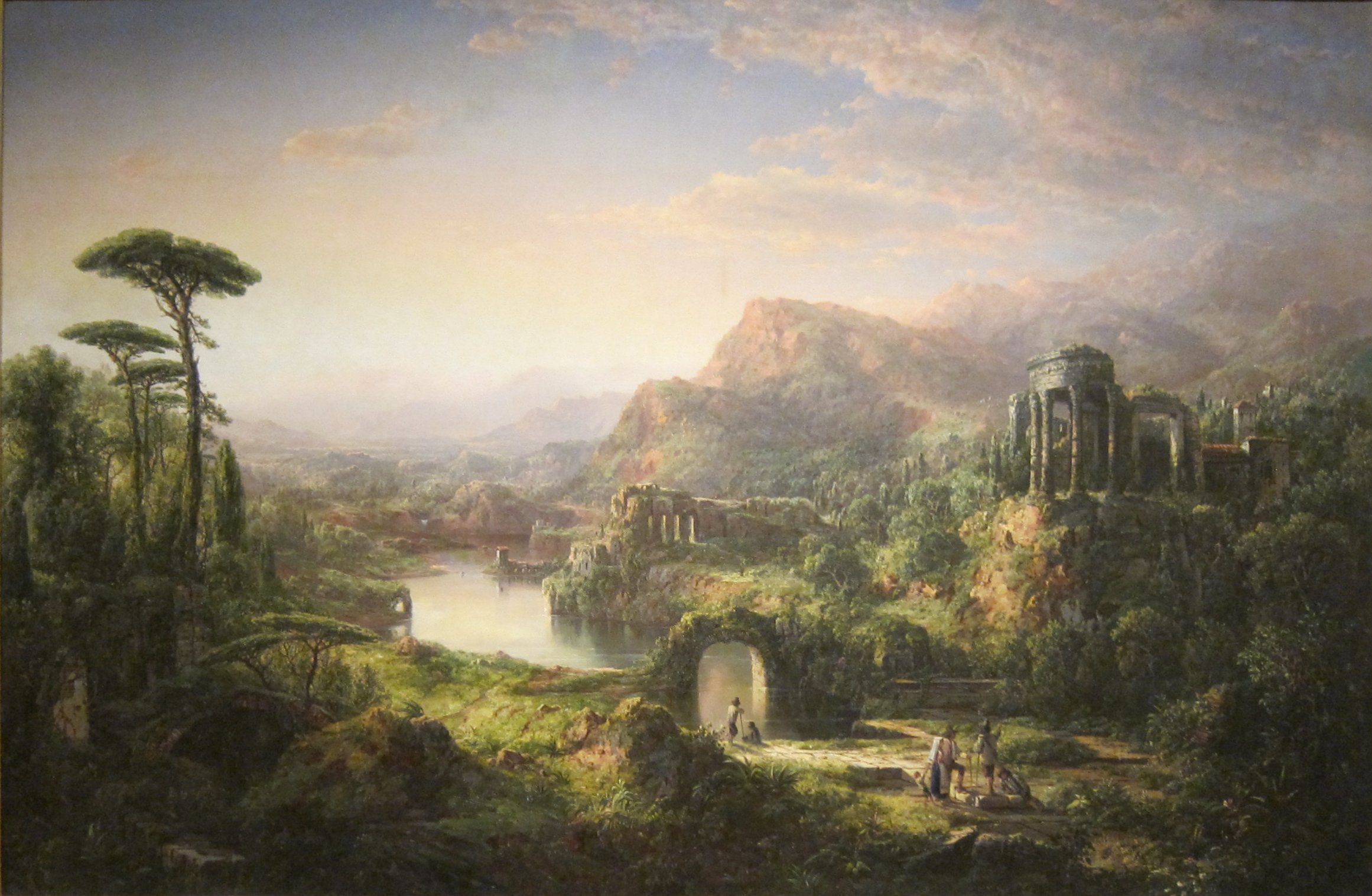
'Dream_of_Italy'_by_William_Louis_Sonntag,_Dayton_Art_InstituteStrange Bedfellows isn’t the only epic dream I’ve had. I’ve had many, many complex, involved dreams over the course of my life. Maybe it’s my personality, maybe it’s my biochemistry, maybe it’s my “wiring”, but there’s some pretty wild stuff that’s showed up while I’ve been sleeping.

Years ago (like, about two decades ago), I posted my dreams as “The Voice of Night”. And that was actually one of the first websites I created, back when the web was young. That site went away, eventually, as early web things often do.

But the dreams all stayed on my hard drive. In html. Waiting to be brought back to the light of day.

Now seems like as good a time as any to do it, since I’m talking about dreams a lot, these days… as well as life lessons. The lessons still hold true. And many of them are actually even more pertinent today, than they were when they first came to me.

It’s going to take some time to post them all. But it’ll be a great way to pass the time 🙂

You’ll find them here, as I re-release them back into the wild:  The Voice of Night – A Personal Mythology of Dreams