Of All the Nerve… writing about the “neuro” things we all experience, but few completely understand

Tripartite Synapse
Tripartite Synapse

Of all the nerve, I — a non-scientist, a non-neurologist, a non-medical person — am writing a book about the nervous system. To make matters worse (in case you’re not sure, I am being facetious), I’m taking the liberty of philosophizing about it — as a non-academic, an unofficial philosopher.

It’s tricky, to say the least. The field of neurology keeps changing. Our understandings of neurobiology are evolving at a rapid rate, as every month it seems someone discovers something new, or puts 2-and-2 together in ways that add up to more than 4. Or, for that matter, they realize there’s another hidden “2” in the equation that nobody noticed before, and they either add it in, or square the values that they’ve discovered before.

It’s tricky, even for people who are highly trained scientists, on the cusp of cutting-edge research. It’s tough to stay current — even (especially?) if you’re actively involved in research, yourself.

But I’m doing it, anyway. Because, when we look closely at the world around us, and we have even the most basic access to what we Do Know About Our Nervous Systems, it’s possible to use that knowledge as a springboard to better understand the world around us. In fact, it’s almost irresistably compelling.

Very few of us understand what exactly is going on inside the sun that produces all that light and heat and those amazing sunsets. But we do know how to reference that light and heat and color in our lives to add meaning and “texture” to our experience. We don’t understand the exact chemical compositions of water and air, but we constantly use them as metaphors, often without realizing it.

I think we can/should do the same with our nervous systems. Over the past 20 years, we’ve gained the ability to look more closely and understand more completely, just how it all works — as far as we can currently tell. That knowledge is continually shifting and changing, of course, and it could be that some (much?) of what I’m writing about will change in the next 20 years. But that shouldn’t stop me — or you — from considering how it all fits together, and how our understanding of it can enrich our lives.

Once upon a time, very distinguished scientists believed that the nervous system was a continuous network of uninterrupted connections — like the vascular system with its networks of veins and arteries. It seemed like just common sense, that the nervous system would also be uninterrupted, just like our veins, allowing the signals passing along our “wires” to get where they’re going in one piece.

People believed this so strongly, that Camillo Golgi, the scientist who figured out how to stain nerves so you could see them as individual pieces, rather than just another dark clump of organic stuff, devoted his entire 1906 Nobel Prize speech to explaining how it was impossible that the nervous system was made up of separate neurons.

His co-winner, Santiago Ramón y Cajal, was a proponent of the “neuron doctrine”, which held that nerves were separate cells that were connected by something, though people hadn’t figured that out, just yet. Turns out Ramon y Cajal was right — but it took decades before we had equipment that could give us a decent view of that.

Did this stop them, though? Did their obviously imperfect, partial knowledge of How Things Work stop them from moving forward in their work? Oh, no. And even when they stood the chance of being proven wrong, they just moved ahead, anyway. Even staked their reputations on it.

Looking back at the past hundreds of years of scientific discovery, as well as changes in how we view ourselves as individual humans in community with each other, I’m struck by just how dynamic our knowledge of science and self is. We are continuously changing how we think about life, how we relate to it, how we regard ourselves, and how we relate to each other. Nothing stays the same for long, but we seem to get in the habit of thinking that How Things Are Now is How Things Have Always Been. It’s not true, of course, but we tend to believe it. Especially now, when we’ve got our online echo chambers to reinforce our biases and support even our least defensible opinions.

But things change. Times change. Knowledge aggregates and opinions proliferate… and at regular (and irregular) intervals, there’s some knew “wrench” being tossed in the workings of our minds.  And so we adapt. Science adapts. Society adapts. We shift and change along with our surroundings, no matter how firmly we may believe that we’re anchored in universal truths. Maybe Truth doesn’t change, but our understanding of it does.

And so it’s important — for all of us — to step out and take some chances in considering the facts of the world around (and inside) us… building an understanding of those facts that works for us and makes our lives more meaningful. Even if the science might shift in a matter of years, even if we don’t have all the answers or all the insight that more accelerated experts do, I think we have every right to avail ourselves of What We Know At This Point In Time, and use that to better appreciate and understand our world.

Even if we aren’t PhD-grade neuroscientists.

Especially if we aren’t PhD-grade neuroscientists.

It’s our world, they’re our bodies. The science has been funded by our tax dollars. And I say we have the right to understand what’s going on in there, so that we can do better at what we do out here.

Book formatting fun

My brain has been full of neurology and neurobiology and neuropsychology for quite a while, now. And it’s nice to take a break and focus on something as straightforward and objective as making sure that all the 10.5pt Caslon540BT fonts got changed to 12pt Constantia. I’m sure it doesn’t sound thrilling to everyone out there, but to me, it is. Read on, if you’re of like mind — or at least intrigued about why something so “dull and dry” would invigorate me.

Beloved Distance Formatting Choices

I took a break from reviewing and editing this morning to figure out some formatting issues. The font I had chosen originally for its nice look turned out to be too fine and faint in print. The printing didn’t translate well, and the headings actually got changed to smaller fonts than in my original, so that’s no good.

My brain has been full of neurology and neurobiology and neuropsychology for quite a while, now. And it’s nice to take a break and focus on something as straightforward and objective as making sure that all the 10.5pt Caslon540BT fonts got changed to 12pt Constantia.

I’m sure it doesn’t sound thrilling to everyone out there, but to me, it is.

There’s something very fulfilling about coming up with the right font. Setting the right margins. Finding a visually pleasing balance between a chapter heading, a leading quote, and the text. Tracking down all the improperly indented first paragraphs… resetting styles… making the often difficult choice between italics or bold or a combination of both.

Each font handles things differently. And how things look in print is often different from how they look on the laptop screen. So, it’s always important to get a proof copy up front, to make sure your vision carries through to the finished product.

Print-on-demand can be tricky stuff. They can replace your custom fonts with their own. They can trim your pages so they have a different margin than you want. All in all, the technology and techniques have come a long, long way, since I started in it, back around 2000 (or thereabouts). And the improvements have been great. So that’s a relief.

Of course, when you’re putting your own work out there, it adds to the work at the end. Probably the most problematic thing is how distracting it can be, when you start thinking about formatting before you’re done writing. Then again, as you’re writing and choosing your images, you have to keep in mind how the whole book is going to flow, not to mention how it will affect the overall presentation and ultimately cost. My 150 pages in the smaller font has expanded to nearly 200 pages with the larger font. I’ve shrunk the spacing of the text so it’s more compact (but still readable), and I’ve adjusted the page margins a bit. Another 50 pages to print will add another $1 to the production cost, so I have to consider that, as well.

Choices, choices. Tradeoffs galore.

Okay, I’m done thinking about formatting stuff. I need to run to Lowes to buy some home repair supplies. And later, I’ll get back to my reviewing.

It’s good to take a break. And it’s even better to know when to get back to work.

So, this book is coming along…

Beloved Distance proof copy cover
Beloved Distance – the proof copy has arrived – no cover design yet.  That’s the last thing to be created.

I’ve been working on my latest book, Beloved Distance : The Separation that Connects Us to All, for the past year or so. Actually, I started it almost two years ago. Time flies. Especially when you get busy.

And yes, I have been busy.

Anyway, I “finished” the book a few weeks back — is a book ever finished? Hard to say. Some authors talk about “abandoning” their books, rather than finishing them. I know, for me, there’s always the temptation to add more… and more… and more. Because I think of a lot more salient details to add.

But that’s really what this blog is for.

Anyway, since I’m publishing the book myself, I needed to get a look at the print quality before I finalized everything. I needed to get a look at how the fonts came out, how the page dimensions look… Get the page numbering together. Table of contents. Sequences from chapter to chapter. Make sure there aren’t numbers on the divider pages. Check the line heights and margins.

Figure out the endnotes.

And of course give more thought to the cover design.

Not to mention, give it one last read — as an actual book — before calling it “done”.

All those last-minute details that make the project feel like it’s dragging on. But they’re very important details, so it’s important to pay attention at the very end. Especially at the end. Because that’s really the beginning of the book.

Fortunately, there’s a long weekend coming up, so I should have a chance to rest up some more and then give it a read. It’s not a terribly long book — about 150 pages, with extra spacing between the lines (which I’ll tighten up in the final version). And I’ve had a few weeks to clear my head, so I can come back to it fresh.

Fresh is good. Especially when an intense project like this is wrapping up… before launching into the world.

Feeling underrepresented? Of course! So, I handle it myself.

According to a new paper Degrees of Difference: Gender Segregation of U.S. Doctorates by Field and Program Prestige published February 6, 2017, women not only earn fewer doctorates in fields that are traditionally separated by gender (golly gee, “Math is hard!”), but also are separated by prestige. Here’s what they say about the paper over at Sociological Science:

Abstract: Women earn nearly half of doctoral degrees in research fields, yet doctoral education in the United States remains deeply segregated by gender. We argue that in addition to the oft-noted segregation of men and women by field of study, men and women may also be segregated across programs that differ in their prestige. Using data on all doctorates awarded in the United States from 2003 to 2014, field-specific program rankings, and field-level measures of math and verbal skills, we show that (1) “net” field segregation is very high and strongly associated with field-level math skills; (2) “net” prestige segregation is weaker than field segregation but still a nontrivial form of segregation in doctoral education; (3) women are underrepresented among graduates of the highest-and to a lesser extent, the lowest-prestige programs; and (4) the strength and pattern of prestige segregation varies substantially across fields, but little of this variation is associated with field skills.

It’s not much of a surprise to me. And looking at the graphic of the distribution of PhDs, why look – there I am in one of the least represented areas – Comp Sci – which looks to be #5 from the bottom, with philosophy not far behind.

soc-science-phds

At first blush, it’s a little irritating (that’s catching me at the start of the day after 9 solid hours of sleep). It speaks to systemic issues of segregation, exclusion, good-ole-boy-ism, and so forth. You know, the standard-issue stuff that women in STEM come to take for granted, but never 100% get used to. Maybe 97.352636%. Or maybe not.

Anyway, be this as it may (here’s hoping it changes – and I suspect it will), the fact still remains that there are ways to enter those fields without a doctorate. True, you may not be ensconced a the highest tiers of the ivory tower, but you can still get in, and you can still work your way up.

As I have, for example. Back in the day – not as early as the ARPANET, but earlier than most people thought they would ever need an email address – it was possible to build up considerable skill and ability on your own. Get yourself access to a computer and an internet connection (at home or at your local library), print out some documentation on emerging technologies (since there were no books, yet, to teach you), study on your own, practice on your own, built real-life applications and design increasingly sophisticated implementations, and before too terribly long, you’d have a solid skillset you could parlay into a real job. A good job. An opportunity that was only available to people with actual skill.

That’s how I got started web development, back in 1995, and that’s how I landed a fantastic job at one of the planet’s leading financial services firms in January, 1997. From there, it was onward and upward — with a lot of bumps and slams along the way — and guess what. I’m still here.

See, this is what people tend to forget in this age of globalized skillsets, where certification and qualification are the currency of the job-application hopefuls. Granted, with regional and cultural barriers to entry considerably less, we need more ways to figure out if someone is actually going to do what they say they’re going to accomplish. Certifications, degrees, standardized qualifications, etc. are great ways to vet people up front, weed out the wanna-bes and put people through the paces before handing them the reins.

But we can get so caught up in the surrogate screens of official vetting, that we stop thinking for ourselves, relying on those official blessings as a cognitive short-cut to save time and energy. We can lose sight of the validity of actual experience, genuine innovation, and the drive of those who are opening up the jungled path before us… not trailing behind, taking advanced courses in road-paving. The work of opening up a path for the first time, takes a certain type of person, while the work of paving that path, then widening it so heavy equipment can fit, is quite different.

Which is why I can’t lose too much sleep (for myself, anyway) over the barriers of entry to anyone who’s not a well-heeled “pale male”. Yes, it’s troubling that women are so under-represented. But there are corners of the world where it’s possible to practice and contribute and innovate, regardless of academic qualifications. And it might just be that the numbers about segregation in doctorates doesn’t tell the whole story, in terms of the true leaders, the true innovators, the ones who are actually leading the way.

It’s still possible to dive into cutting-edge technologies without an advanced degree and open a new path in ways that no one ever thought possible / necessary. In fact, for the most advanced, innovative, emerging areas, you’re not going to find a whole lot of formal education, anywhere, because standards have yet to be defined, textbooks have yet to be written, syllabi have yet to be compiled. Likewise in philosophy, it’s perfectly possible to use your own mind for the furthering of the practice. You can develop your own theories, you can evolve your own individual thinking process (which is nothing like anyone else’s), and there’s nothing to prevent you from putting your work in writing, publishing it, and carving out a place for it in the world.

This sort of activity, this sort of developmental discipline, doesn’t require the presence or avid support of an academic community. In some ways, in fact, you might be better off not having any of that. You might not have a built-in entourage of colleagues who eagerly support / promote / challenge / criticize / plagiarize your work, but there’s nothing to prevent you — as a woman, as a person of color, as a non-PhD philosopher — from moving your own work forward.

In the end, it’s what we all have to do, anyway. Your mind has to be your own (as much as possible). Your work needs to be original. And it needs to stand on its own. Smart people who take the time to think for themselves may respect your work on its  own merits, and those are the folks you care about, anyway.

A doctorate isn’t going to guarantee that any more than a daily discipline to targeted development that’s totally devoted to your path. So, while it might be nice for various industries to have more diversity in more advanced positions (they seem to think so, based on all those inclusive-seeming Super Bowl 51 ads), it’s not a prerequisite for your own path. You can still do The Work. You can still develop your skills in ways that no one else on earth can rival. Innovation has its home far out in front — where there are no courses or certificates yet available.

If that’s where you belong (as do I), looking back is just going to delay your forward movement. So, look ahead, beyond, above, ahead.

The world needs you there.

Strange Bedfellows – Foreword to the 2nd Edition

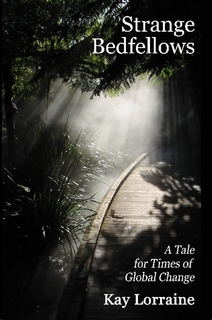
strange-bedfellows-cover-klIt’s now been over 20 years, since I had this dream in the upstairs loft of a pink house built not so far from my ancestral home. The story at first alarmed me with its scope and detail – who has dreams that are that vivid, that cohesive?

Then it intrigued me.

Then it annoyed me, as I tried to put it down on paper, only to find the pictures defying the use of words.

It took me years to finally get the story told. And all the while, it taught me many valuable lessons.

At first glance, this story might seem like a finger-wagging eco-warrior rant about the excesses of our toxic modern lives… our lust for luxury, our craving for comfort, and all the harm it does to Planet Earth. Indeed, when I awoke from this dream, all those years ago, that’s exactly what I thought it was: A wake-up call to alert us to Change Our Ways Before It’s Too Late… before our last chance to save the earth – and the human race – is gone forever.

And you wouldn’t be wrong to think that’s so. In a way, on the surface, it is very much about exactly that. We say we want to help the earth, but we make poor choices. We say we’re committed to change, but we set unrealistic and unwise priorities, and abandon them when we realize we can’t do it easily. We do things without thinking, and the world around us pays the price for our oblivion.

And yet, there’s something more to this story – something more enduring, something more global. It’s not just about a couple of spoiled, upwardly-mobile professionals who will stop at nothing to satiate their desires for success and luxury. It’s about much more than that. As you read the story in the coming pages, think beyond what’s on the surface. Look deeper into the behaviors and the choices that Paul and Christina make… and if you dare, look for signs of yourself in their shoes, making the same sorts of choices, for the same sorts of reasons, with the resulting consequences.

Your choices – our choices – needn’t only be about upward mobility, status, and prestige, to get us in trouble. They can be as seemingly innocuous as the decision to order takeout, instead of warming up leftovers. And abandoning our commitment to lasting change can be as casual as dismissing a set of New Year’s resolutions, because in February they’re just not as realistic (or fun) as they seemed back in December.

None of our choices are simple, these days. So many of them send ripples we cannot see into the world far beyond us. And it’s difficult to know how best to change course, and why. So, what better time to really think our choices through, really weigh the costs of committing to (or abandoning) them, than at this point in history?

Some say we’ve passed the turning point. I say we still have some turning left in us. But we have to be willing to turn – and stick with it.

Last two poetry books updated – now on to Strange Bedfellows.. and beyond

woodtypeOkay, so that’s done.

I just updated the last two poetry books I published. It’s not difficult – just a lot of attention to detail. Changing half of your name, and then updating everything accordingly, can get a bit eye-crossing. Especially if there are ebook versions, as well as print versions. I still haven’t decided what to do about the ebooks. The name will have to change there, as well.

Just when it seems I’ve gotten everything fixed… I find something else. So, I check, and check, and double-check. Especially because I’ll be publishing to Amazon and other international distributions, which means I need to ensure everything – but everything – is pristine and perfect. Once you put an ISBN to something and publish it via international distribution, you’re locked in. So, you have to make it count.

Again, it’s eye-crossing.

But now, it seems it’s all set.
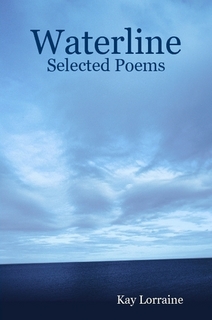
waterline-coverparadise-cover

I’m digging into Strange Bedfellows, now. From a logistical standpoint, the work is more painstaking, because the file is bigger and takes longer to save. Plus, it’s chock full of images, which now and then have a tendency to shift around on the page – and then throw off the page count. Fortunately, I’m working in Open Office, so the file formats are the same (No M$FT Word for me, thank you very much). Plus, Open Office file sizes are a lot smaller, so there’s less drain on my finite system resources.

And that’s always nice.

If you have the proper tools, you can do amazing things. And if you practice good attention to detail, you can really create some professional-looking products that anybody would think are commercially produced. That’s one of the benefits of having worked in publishing before — both print and digital. You pick up tips and tricks, plus you develop an eye for the kind of detail that goes into creating quality materials.

Some people think that you have to have access to money and contacts and resources, in order to produce professional-looking books. On the contrary, I’ve been doing “guerrilla” publishing since the 1980s, and some of my “amateur” works look just like what you’d find in the bookstores. If you have the desire and you keep at it and you set your sights high –and never give up till you create exactly what you want — great things are possible.

If there’s one thing I’d want people to know about putting their own writing out there, it’s that. What I said above. I’ve come across a lot of people who have either had a sour-grapes attitude (“Well, of course you made something nice – you work for a big company and have access to their equipment!”), or a sort of resigned approach (“I don’t need anything fancy, just some copies made up at the local office supplies store.”)

I disagree on both counts. First off, my books don’t look great because I use my employer’s stuff. I don’t. I’ve figured out how to either use what little I have very creatively, or I found a way to get access to the equipment I needed on an occasional basis. You don’t need to have constant access to a full-feature printer, to crank out a handful of poetry chapbooks. You can mock everything up at the local library, print it out for 10 cents/sheet, and then take it to your local copy shop to create the finished product.

If you want to publish full-length books, you can do it for free at Lulu.com. They have everything you need to publish a full-length book with a nice-looking cover, and it won’t cost you a think to set it up. You can do the pre-production work on the computers at your local library.

As for “keeping it simple” and going with a bare-bones approach… It’s so straightforward, and so possible, to produce a really nice-looking work on your own, that there’s really no reason to do without good design. All you need for inspiration and guidance, is a trip to your local bookstore or library, to see examples for best-practices in book design and layout. And then you just copy what they do.

It’s really quite simple. But a lot of people make it hard in their heads.

Far more important than expensive equipment or professional publishing skills, is a keen sense for detail and what makes a published product look — and feel — great. Once you’re clear on that, everything becomes a lot clearer.

Now… on to updating Strange Bedfellows.  I’m writing a new foreword, as well as a conclusion. The story, on the surface, reads like an eco-warrior treatise about the hazards of modern living. But beneath it all, there’s more… so much more.

And there will be more to come about that. Soon.

Change for Good – Beyond the four-year altar-call

churchEvery four years, we’re treated to talk about change during the presidential elections. Everybody makes the case about why change is either needed, or not. And everybody has plenty to say about the new policies everyone else is proposing.

Who doesn’t want change? I certainly do. Good Lord, yes. I think you’d have to be either asleep or on very good drugs, to not desire at least some change in the world. If you’re just mildly paying attention, you’re aware of at least one or two (or two million) things that could use some improvement.

And all the political candidates have some pretty persuasive points. I’m in the unfortunate situation, where I can see the reason for every candidate’s platform. I can’t just discount them and call them “crazy” — because at a basic, human level, I understand them.  Of course, understanding where they’re coming from doesn’t mean I agree with them — not in the least. But I do understand their perspectives, and I completely understand exactly why they and their supporters feel the way they do.

There’s one thing that eludes me, however — and that’s why anyone thinks that the change that’s most needed is going to come from on high, via a presidential candidate, when the “boots on the ground” are still hewing to the same-old-same-old. Seriously, we seem to collectively think that having a new butt in the seat of the Oval Office is going to steer the ship of state in some magically transformative direction… and meanwhile, all the folks down on the benches in the galley are rowing in the same old direction. Or not rowing at all — chances are, they’re on their smartphones.

What part of this makes sense? None of it, from where I’m sitting.

For the last four years — and all the four-year periods prior to the last election — the American public has done a fantastic job of avoiding making pretty much any personal investment in systemic change. We’ve enthusiastically pointed fingers and called names (we’ve got that down to a science), but what have we really — truly — done to actually bring about the changes we believe will save us all? Hell, we haven’t even bothered to more fully understand the issues we all face, collectively. We’re so busy snarking away on Facebook and tweeting our discontent, that any chance of in-depth discussion is, well, non-existent.

And no, watching a late-night current events discussion show does not count. Nor does having the political landscape explained to you by the pundit of your choice, as you nod in agreement.

None of that counts. Emoting is not effecting change. Reacting is not acting. Tweeting and posting is not social activism. And, sorry, flashmobs don’t count. Even if they are posted to YouTube and go viral.

What actually counts, is action. Doing something about your beliefs and values in a substantive, consistent way. You need to do the small, boring, unimpressive, personally costly, utterly transformative things each and every day, whether or not somebody is watching, whether or not it gets attention in social media and tons of likes. And guess what — it doesn’t count in an election year. Anybody can do or believe in sh*t in an election year. Just about everybody does. Anybody can gravitate to a political line and jump on board the party boat, every four years. Who doesn’t?

Watching all the political/ideological hullabaloo, this time of year, is like watching an altar call, when you see intransigent repeat offenders making their way to the front of the revival tent to have all their transgressions wiped clean… just like they’ve done regularly, as long as you’ve known them. And based on past experience and observation, there’s a pretty good chance they’re going right back to their evil ways, as soon as the glow of the revival wears off.

Same thing happens each election year. People get all up in arms and holier-than-thou and righteous and what-not… so-so-so sure that their candidate is The Cure for All That Ails Us. They’re true believers, and they support their candidates in word and deed. Then the election comes. Maybe they win, maybe they lose. But whatever the outcome, once the dust has settled and the new POTUS has their butt in the Oval Office seat, we all go back to business as usual.

And we spend another four years of habitual oblivion, racking up yet more reasons to be outraged and desperate, the next time around.

Considering how much more dire each subsequent election becomes, with “more than ever riding on the outcome”, it’s hard for me to take anyone’s burning political convictions seriously. Where’s all that social traction or that same devoted fervor when it’s NOT an election year.  It’s nowhere to be found. Who writes to Congress? Who even calls their representative? (Signing an online petition doesn’t count, by the way, because the recipients often completely disregard them, because they’re so easy to fudge.) It’s all hands-off in the general population, and then we bitch and complain about how lobbyists have taken over our government. Lobbyists and special interests didn’t “take over” anything — they stepped into a gaping void that we’ve all created… and invited them into by turning a blind eye.

We rarely bother to really understand the full spectrum of the issues we face — we just hew to proposals floated by our candidates. Who among the believers that “big banks must be dismantled” understands the impact that would have on the pensions of countless retired schoolteachers? Or union members? Or other folks who have worked long and hard, and who rely on that pension to make ends meet? Who among the proponents of deporting all the “illegals” understands what impact that would have on the economy — or how their own constant craving for low prices drives the underground economy of undocumented labor? Who among the backers of a strong military understands how our long-standing foreign policies and global economic interdependencies contribute to ongoing strife that locks us in a perpetual state of policing and military intervention on behalf of more countries than just our own? And who among those who long for a return to Christian values, realize how vulnerable they are making themselves — because there are so many different flavors of Christian values, and many of those values have been used for centuries by Christians to disenfranchise and kill other Christians, with full religious justification?

We have no collective grasp of the full scope of the issues and challenges that we face as a nation, together. But to us, that’s not the problem — the real problem, apparently, is that other people just don’t agree with us.

All the ballyhoo, all the drama.  It’s both entertaining and annoying. Because seriously, people, who is actually willing to put their money where their mouth is and take action by themselves, instead of looking to some national leader to point them in the right direction? Where’s the action, outside of election years, that backs up your commitment to change? People want energy independence, but they can’t do without their electronic devices and creature comforts. People want clean water for Flint, but they’d rather have cheap cars from Detroit. People want to protect the earth, but they can’t be bothered to separate out their recycling, or cut back on their driving. People want their kids to grow up in a safer world, but they won’t weigh in with their elected representatives on how to make that happen. People want gun rights, but they don’t want to learn how to responsibly and effectively use a firearm, so they don’t kill innocent bystanders.

We want our lives customized and personalized. Screw what that does to the environment. Never mind the expensively toxic bricks that Prius batteries are. We get save gas and look all the more eco-friendly. Never mind the haz-mat incidents waiting to happen when we throw away those new fluorescent light bulbs. They’re easy to come by and they save us money. New iPhone! Woo hoo! Never mind the massive buildings in China housing thousands upon thousands of workers, some of whom leap to their deaths out of desperation. That has nothing to do with us. It’s just sad. Here, let me share that on Facebook or Tweet a 😦 about it.

All this election year talk is just that — talk. For all the outrage and insults, within weeks after the election results are in, the vast majority of people will drop championing the issues and retreat to their social media corners, snarking about oversimplifications from the safety of the interwebs. They’ll say plenty — especially if they’ve “lost” the election — but will they actually do anything? For all the talk about values and the need for change, where’s the action to back it up… especially on an ordinary everyday basis? Where’s the direct contact with our dreaded Congress, to tell them what we actually want and need? Where’s the choice to forego creature comforts for the sake of preserving what we really care about?

Where indeed?

If you really want change, you need to act like it. And if I don’t see it outside of election years, then nothing you can say is going to convince me that you are serious about your political platform. Or that your candidate is a serious contender to actually lead.


Much of my thinking about change was influenced by a dream I had over 20 years ago. It’s now published as Strange Bedfellows –  a story about how we change … and don’t. Get the book here.

An epic tale of change – what drives it… and more

Strange Bedfellows - get your copy here
Strange Bedfellows – get your copy here

Everything is going great for Paul and Christina. Their careers are fast-tracking them to success, and their future prospects are excellent. They take what they desire and live life to the fullest. Everyone and everything around them reinforces their entitlement, and they have no reason to question their right to do what they please, when they please, to whomever they please.

But in the blink of an eye, everything they’ve worked so hard for is at risk. What will they do, when a grisly guest appears out of nowhere? Will they have the courage to make the changes necessary to save themselves from a horrible fate they have helped to create?

Strange Bedfellows is a cautionary tale for our times, a retelling of an epic, intricately detailed dream I received in 1992. This is a story of truth and consequence… entitlement and impoverishment… conscious choice and change… and the hazards of being motivated solely by self-centered fear and short-sighted ignorance.

>> Get your copy here  <<

First three poetry chapbooks are updated – for now

I just updated my first three poetry chapbooks

First Refrains – my first poetry from decades ago. It’s still one of my favorite books, and it reminds me why I’ve always written poetry.

first-refrains-cover-kl

Sounds of Love and Hope – a fairly strong “sophomore” showing, if I say so, myself.

sounds-cover-kl

Depth Perception – where I dig a big deeper, not always as successfully as I’d like, but still with integrity.

depth-perception-cover-kl

I’ve got two more poetry books to go, and then the change to the few other books I’ve got, but that’s enough for today.


The books are under re-construction

So, now that I’ve decided to write under a pen name, I must revise all my past books to reflect my new identity. I’ve been publishing on Lulu for many, many years, and I’ve cranked out a bunch of books in the process. I’ve also started a number of projects which I never finished or fell victim to lack of time, so that actually inflates the perceived amount of work.

Turns out, when I look more closely, it’s not insurmountable. And it also turns out that some of those old projects really need to be retired, as they’re cluttering up my space for no good reason.

All told, my past published works that I’m carrying forward consist of: five poetry books, a handful of self-help books, a how-to guide on turning your eBook into a printed book, and a novella. The rest can come down. The podcasting guides, audio production training, and a handful of other odd projects once seemed like a good idea, but they’re not something I want to carry forward. And there’s more to come.

waterline-coversounds-cover
first-refrains-coverdepth-perception-cover
paradise-coverstrange-bedfellows-coverfrom-e-to-ink-coveras-you-think-coveras-a-woman-thinketh-coverpuzzle-of-wholeness-cover