A welcome reminder of how much myth matters to me

books-dustySo, just by chance, a couple of weeks ago, I accompanied my partner Laney to the annual conference of The Association for the Study of Women and Mythology.  A few months ago, Laney had gotten a (surprise, last-minute) email from a colleague about how the conference was still accepting applications for workshops and presentations… and would she be interested?

Well, yeah. Of course she was interested.  It was a conference of several hundred women, all gathering to talk about women… and mythology. Laney’s an incredible drum circle leader and ceremonialist, and we both thought her work would fit just perfectly into the program.  Lots of academics sharing papers and discussing their areas of study… and surely there were some women in the midst who could go for an “extra-intellectual” activity (“extra” as in, “outside the immediate purview” of intellectualism — not uber-intellectual).

Anyway, we scrambled a bit, put together a write-up of what she’d offer, then we crossed our fingers and — voila — before long, we heard she’d been accepted.

Then came the coordination activities. And the logistics. And making sure that the drum ceremony would not drown out the goings-on in adjacent rooms. And lining up  help to get the room setup, because it’s a conference, after all, and there is a schedule to adhere to. We got pretty much everything sorted.

Or so we thought. Turns out, the original schedule we mapped out just wasn’t going to work. More juggling. More adjustments.

Anyway, long story short, everything turned out great, because I managed to get a day off work (paid vacation days are a thing of beauty), so I could help her load in and load out on Friday afternoon. Drums, drums, and more drums — including the “mother drum” which is a large “community” drum, about 3 feet wide and nearly 2 feet tall, and comfortably sits 5 people around it. It takes a special sort of maneuvering to get where it needs to go, and I’ve had years of practice, so off I went to drive Laney there, catch up on my reading, then help with the ceremony, load out, and ferry us home.

My plan all along was to help with logistics, and then take the hours that I wasn’t at the conference just for some of my own work. I had some reading to catch up on. I had some writing to do. I hadn’t paid the money to join in, and it wasn’t cheap, so I figured I could just linger in the halls, curled up with a book in a spare armchair.

And I did a fair amount of that. At least, as much as I could, considering that I kept seeing old friends I hadn’t seen for a number of years, and of course we wanted to catch up.  Of course! It was great to see people again, and a bit surprising — although it shouldn’t have been, considering that I have a bunch of friends who are into women and mythology.

I guess I just had a fairly narrow view of who would be at the conference. Lesson learned.

And as it turned out, I had a fairly narrow view of how much I would be interested in the conference. I mean, yes, I’ve been fascinated by mythology in general (and women in mythology, in specific) for just about all my life. But for some reason, I didn’t think I’d really find it that interesting. Looking at the program, it was chock-full of some heavy-duty scholarship… far beyond the scope of my own interest and involvement. Maybe I figured that if I didn’t have all the degree letters after my name, I somehow wouldn’t qualify to attend, let alone participate in any of the discussions.

Gluehende_KohleA funny thing happened, though, just from hanging around the fringes of the conference.  As it turns out, I was interested. And I’ve actually become increasingly interested, over the course of the past couple of weeks. It got me thinking. It got me remembering. And beneath the shiny veneer of a life that’s more about modern technology than ancient mythology, these days, I actually found a glowing coal of interest that has stayed alive — banked in the backwaters of my full spectrum of interests.

And calling that interest — that passion — in mythology “banked” is the perfect metaphor. When you bank a fire, you cover it up with the ashes its produced, keeping it alive and glowing, till you come back to it later. I’ve heard tell that people used to travel with banked coals in a little tree bark container, so they could have fire wherever they were.

As it turns out, I hadn’t lost my interest in mythology and symbolism, as I tended to think while regarding my bookshelves sagging heavily under the weight of myths from vanquished and long-forgotten peoples. I’d just banked it. And it’s still very much alive. It still burns beneath the accumulation of extras from my necessary life, waiting for me to breathe new vigor into it and warm the rest of my everydays.

Myth still matters to me. As does symbolism. It’s never stopped mattering to me, I just got busy doing other things. And now those other things turn out to mean a lot less to me, than mythology always has. Life changes. We change. We shift and find new directions to take. Sometimes life brings us full circle, to remember just what used to light our fire — and still does.

Here’s to life. And all that it offers. Especially our stories.

Hulačová – Otherworldly sculpture — Global Art Junkie

Very cool! Check it out…

This artist from the Czech Republic has recently emerged on the international scene. The figures that comprise the cast of Anna Hulačová’s otherworldly sculptures are inspired by religious icons, mythological gods, and folkloric beasts.

via Hulačová – Otherworldly sculpture — Global Art Junkie

The Voice of Night – Reclaiming the Castle

woods-clearingI had a remarkable dream, one night. I dreamed I was attending an herbalist convention, held at a camp in the middle of a northeastern forest. There were both men and women there, all of us deeply committed to the healing arts. The main lectures took place in a medium-sized camp hall, where about nine rows of folding chairs were set up in front of a podium. There were other workshops and classes on the schedule, in other small buildings around the camp. But the main discussions and speeches took place in that main hall.
I had been listening to lectures about herbs all day, and I was tired of so many words. So, I got up and took a walk in the woods to stretch my legs. I walked a long way, through the hardwood forest, the ground soft with many seasons of fallen leaves, as well as the ferns and moss common on the Eastern Seaboard. I walked farther than I realized, though, and soon I found I was lost. I stopped and looked around, but could see nothing but trees, could hear nothing but the wind stirring in the leaves, as well as little creatures scampering across the forest floor.

As I turned and looked around, I suddenly caught sight of a part of the ground that seemed to be dug up, off at a distance of some 100 yards. I walked closer to it, wary, but I could see or hear no other humans or sign of danger. As I came closer, I realized it was a huge pit dug in the forest floor — rectangular and stone-lined, it reminded me of an immense swimming pool, or an inverted castle submerged in the ground. The top of the pit was flush with the forest floor, and it went down many feet into the earth. The stones that lined it were perfectly cut and set together, and the whole structure was about 20×30 yards in size. I crept closer and closer to it, still not certain what this was. As I came to the edge, I looked down, and saw it had water sitting in it. I couldn’t tell how much, but there was a good deal — brown, almost brackish, but surprisingly inviting.

For some reason, I thought it would be refreshing to take a dip in this pool in the middle of the woods. I wasn’t sure why, but it beckoned to me. I was hot and sweaty and stiff from sitting all day in that camp hall, and a swim seemed like just the thing. If I got dirty from the water, I thought, I could always go back and wash off. I jumped in with my clothes on.

The moment I hit the water, I was flooded with an intense sensation of wholeness. It wasn’t just a sense of well-being — it was intense and almost overwhelming sense of oneness, of fullness and no awareness of lack or limitation of any kind at all. I was free. I splashed around in the water, did backstrokes and somersaults, and paddled around, filled with a sense unlike anything I’d ever had before. My whole being was suffused with a sense of peace, safety, well-being — a Divine sense of consummate satisfaction that calmed every irritation and smoothed every wrinkle of worry from my being. I could hardly believe it. This brackish water, which at first sight looked tainted with rotting leaves, filled me with joy beyond any expression.

I swam from one end of the pool to the other, testing the depth of the water. In one place, it would be six inches deep, in another it would be too deep for me to reach the bottom. Every square yard of the pool had a slightly different bottom, and I tested the depths with serene pleasure. I splashed and dove and played for almost an hour.

Then I decided it was time to get out. It was getting dark, and I thought I’d better get back to my conference and finish out the day’s lectures. I pulled myself out of the pool, dripping, blissful, and amazed at the experience. I could hardly believe this had happened to me, and I thanked whatever or whoever had led me there, for allowing me to experience this bliss.

I looked up, then, and saw two women watching me. They were middle-aged, with long, grey-streaked hair filled with twigs, leaves, and moss. Their faces were smudged, and they wore long burlap-like dresses that were tattered around the edges. Their skin was weathered and dark, but their eyes were clear and bright. They introduced themselves to me as the ones who were excavating this ‘site’. They said they were anthropologists who had been searching for Camelot all their lives, and they finally located it here. “That pool you were swimming in,” they said, “is Camelot. It’s always been here, and it’s still here for anyone who needs it.”

I was flabbergasted, speechless. I didn’t know what to say. They told me that they’d been working on this dig for years, now, and it was finally ready for others to experience. It was time to start telling people about it. They said I should go back to my workshop and not hide what I’d found. At the same time, though, I shouldn’t tell just anyone about this place. “Not everybody is ready for this,” they said. “Not everybody will want it, either.” I couldn’t imagine anyone not wanting what I’d found here, but they insisted I be selective in whom I told, while not being reluctant to discuss Camelot with those who were genuinely interested. Then they told me to go back, and I bid them good-bye. I said I would see them later, and they said, perhaps I would.

I returned to the camp, my clothes dry from walking briskly. When I got back, I could hardly wait to tell people about my experience — yet I wasn’t sure whom to approach. Besides, it was time for the keynote speaker, Patrick Stewart, the actor who plays Captain Jean-Luc Picard on the television show, “Star Trek – The Next Generation”. My head was in a whirl the whole time he spoke, but I picked up some of what he said.

He told us that although he played a starship captain on television, we herbalists were actually doing the same work as his co-players on the show — making inroads in whole new areas of life, and making it possible for humanity to expand beyond its own limitations. “You are the real thing,” he said, “and your work is as vital as my role on television seems.” His words sent a thrill through the audience, and we knew he was right — we were doing important work. Yet all the while he was speaking, he seemed distracted, tired, weary, and frightened. He seemed totally depleted, and although his words had the ring of truth, they came from a taxed and worn soul.

When he was finished speaking, we jumped to our feet, applauding. He stepped back from the podium, drawn and pale, and the audience broke up. Some gathered together in groups around the room to discuss the conference, while others of us went up to Patrick to shake his hand or ask him questions. He was polite to everyone, yet distant.

I stayed at the edge of the crowd surrounding him, waiting my turn to speak with him. When most of his admirers had praised him and moved on, I approached him and thanked him for his talk. “But I want to give you something back,” I said. “I just want you to know that Camelot is here. It’s not far away in some star system, it’s not halfway around the world. It’s here. I’ve been there just today, and I can show you where it is. We can go anytime.”

At that, Patrick fixed an intent gaze on me, disbelieving. “It’s here,” I said again. “We can go to it anytime you like. Right now, if you want.” All the hardness and tired lines faded from his face, and he broke down and began to cry. He cried very hard, like a little baby, holding his face in his hands, his shoulders shaking, while people around the room looked over at him, surprised and wondering. Some came over to see what was going on. After a few minutes, he collected himself and looked up at me and asked me where it was. He appeared hopeful for the first time all evening. Others around the room said, “Yes, where is it?” and came over to hear the answer. I told them where, and they all looked at each other with wonder. They couldn’t believe Camelot was so close, but I assured them that I had been there.

Some in the room heard what we were saying and turned away. They had no interest in going to see the place or experiencing it, and they said as much. They just wanted to discuss what they’d learned that day in their classes. They were hungry, or they were tired, or they just weren’t interested. They didn’t begrudge us our enthusiasm, just moved off in their little groups to get an evening snack in the cafeteria, or get ready for bed.

Those of us who did want to go to Camelot began to move out in clusters. I gave instructions on how to get there, and in small groups, we moved out — some racing at top speed, some going at a measured pace, others stopping to get their swimming suits or talk some more. I went with Patrick Stewart and a small group of women. As we approached the place in the woods where the pool was, we could hear laughing and splashing. Patrick’s demeanor was becoming lighter all the time, he had a spring in his step, and he was now talking animatedly, joking with the women in our group. We came near the pool and could see through the trees a luminous shining surrounding the pool, as some of my fellow students leaped and dashed and splashed into the water in hilarious ecstasy. Others stood around the edge of the pool, watching and enjoying themselves at the sight. Off to the side, I saw the two women who had unearthed this treasure. They nodded to me as I came near and smiled appreciation and approval to me.

I knew then, I had done the right thing. I ran to join the others in the pool, just as Patrick dove into the water that would renew him.


The Voice of Night – Dreams from a Dreaming Past

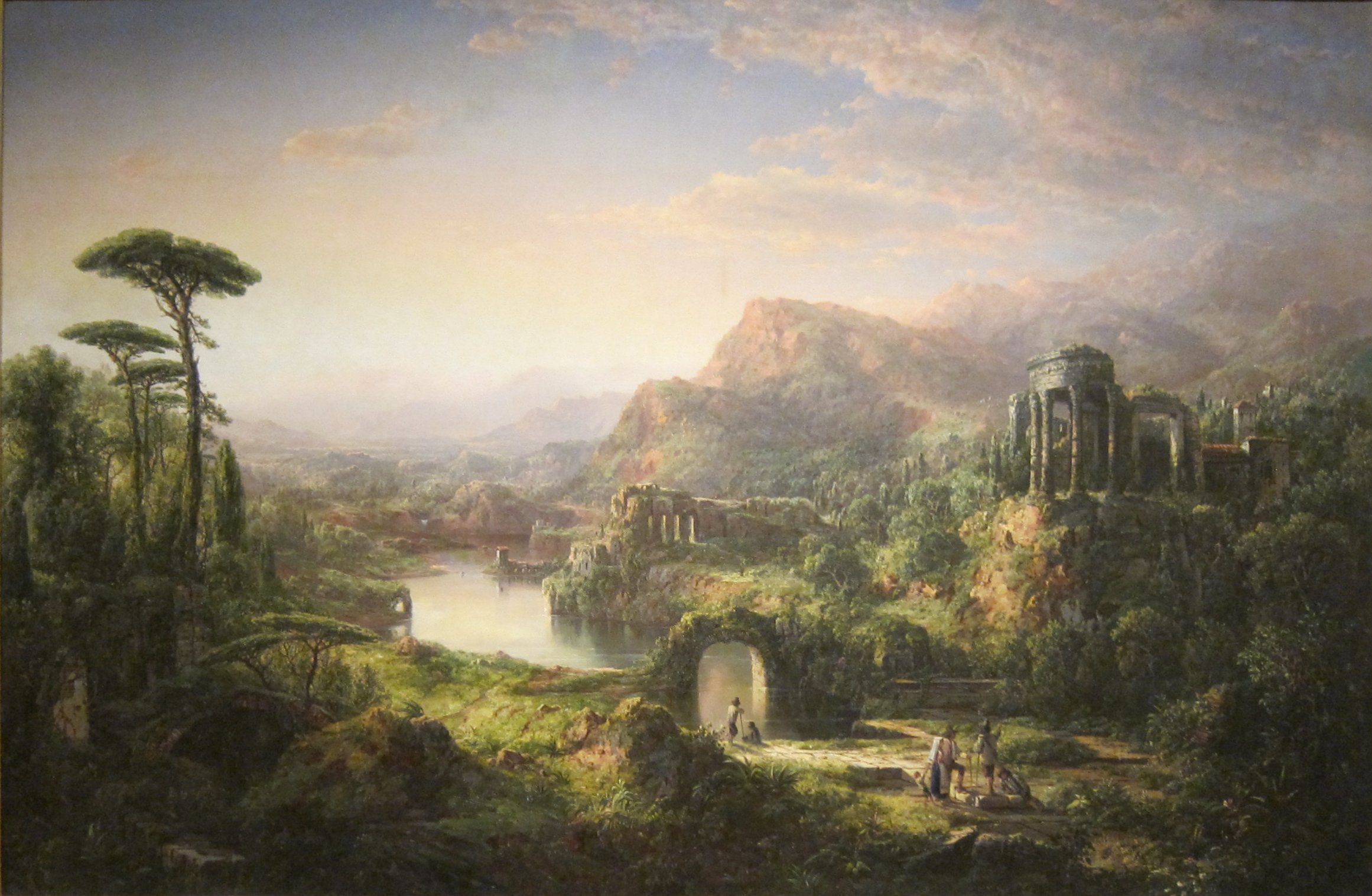
'Dream_of_Italy'_by_William_Louis_Sonntag,_Dayton_Art_InstituteStrange Bedfellows isn’t the only epic dream I’ve had. I’ve had many, many complex, involved dreams over the course of my life. Maybe it’s my personality, maybe it’s my biochemistry, maybe it’s my “wiring”, but there’s some pretty wild stuff that’s showed up while I’ve been sleeping.

Years ago (like, about two decades ago), I posted my dreams as “The Voice of Night”. And that was actually one of the first websites I created, back when the web was young. That site went away, eventually, as early web things often do.

But the dreams all stayed on my hard drive. In html. Waiting to be brought back to the light of day.

Now seems like as good a time as any to do it, since I’m talking about dreams a lot, these days… as well as life lessons. The lessons still hold true. And many of them are actually even more pertinent today, than they were when they first came to me.

It’s going to take some time to post them all. But it’ll be a great way to pass the time 🙂

You’ll find them here, as I re-release them back into the wild:  The Voice of Night – A Personal Mythology of Dreams


Last two poetry books updated – now on to Strange Bedfellows.. and beyond

woodtypeOkay, so that’s done.

I just updated the last two poetry books I published. It’s not difficult – just a lot of attention to detail. Changing half of your name, and then updating everything accordingly, can get a bit eye-crossing. Especially if there are ebook versions, as well as print versions. I still haven’t decided what to do about the ebooks. The name will have to change there, as well.

Just when it seems I’ve gotten everything fixed… I find something else. So, I check, and check, and double-check. Especially because I’ll be publishing to Amazon and other international distributions, which means I need to ensure everything – but everything – is pristine and perfect. Once you put an ISBN to something and publish it via international distribution, you’re locked in. So, you have to make it count.

Again, it’s eye-crossing.

But now, it seems it’s all set.
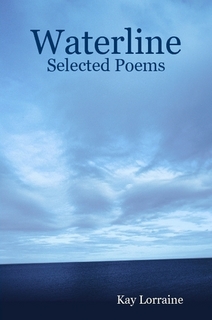
waterline-coverparadise-cover

I’m digging into Strange Bedfellows, now. From a logistical standpoint, the work is more painstaking, because the file is bigger and takes longer to save. Plus, it’s chock full of images, which now and then have a tendency to shift around on the page – and then throw off the page count. Fortunately, I’m working in Open Office, so the file formats are the same (No M$FT Word for me, thank you very much). Plus, Open Office file sizes are a lot smaller, so there’s less drain on my finite system resources.

And that’s always nice.

If you have the proper tools, you can do amazing things. And if you practice good attention to detail, you can really create some professional-looking products that anybody would think are commercially produced. That’s one of the benefits of having worked in publishing before — both print and digital. You pick up tips and tricks, plus you develop an eye for the kind of detail that goes into creating quality materials.

Some people think that you have to have access to money and contacts and resources, in order to produce professional-looking books. On the contrary, I’ve been doing “guerrilla” publishing since the 1980s, and some of my “amateur” works look just like what you’d find in the bookstores. If you have the desire and you keep at it and you set your sights high –and never give up till you create exactly what you want — great things are possible.

If there’s one thing I’d want people to know about putting their own writing out there, it’s that. What I said above. I’ve come across a lot of people who have either had a sour-grapes attitude (“Well, of course you made something nice – you work for a big company and have access to their equipment!”), or a sort of resigned approach (“I don’t need anything fancy, just some copies made up at the local office supplies store.”)

I disagree on both counts. First off, my books don’t look great because I use my employer’s stuff. I don’t. I’ve figured out how to either use what little I have very creatively, or I found a way to get access to the equipment I needed on an occasional basis. You don’t need to have constant access to a full-feature printer, to crank out a handful of poetry chapbooks. You can mock everything up at the local library, print it out for 10 cents/sheet, and then take it to your local copy shop to create the finished product.

If you want to publish full-length books, you can do it for free at Lulu.com. They have everything you need to publish a full-length book with a nice-looking cover, and it won’t cost you a think to set it up. You can do the pre-production work on the computers at your local library.

As for “keeping it simple” and going with a bare-bones approach… It’s so straightforward, and so possible, to produce a really nice-looking work on your own, that there’s really no reason to do without good design. All you need for inspiration and guidance, is a trip to your local bookstore or library, to see examples for best-practices in book design and layout. And then you just copy what they do.

It’s really quite simple. But a lot of people make it hard in their heads.

Far more important than expensive equipment or professional publishing skills, is a keen sense for detail and what makes a published product look — and feel — great. Once you’re clear on that, everything becomes a lot clearer.

Now… on to updating Strange Bedfellows.  I’m writing a new foreword, as well as a conclusion. The story, on the surface, reads like an eco-warrior treatise about the hazards of modern living. But beneath it all, there’s more… so much more.

And there will be more to come about that. Soon.

Change for Good – Beyond the four-year altar-call

churchEvery four years, we’re treated to talk about change during the presidential elections. Everybody makes the case about why change is either needed, or not. And everybody has plenty to say about the new policies everyone else is proposing.

Who doesn’t want change? I certainly do. Good Lord, yes. I think you’d have to be either asleep or on very good drugs, to not desire at least some change in the world. If you’re just mildly paying attention, you’re aware of at least one or two (or two million) things that could use some improvement.

And all the political candidates have some pretty persuasive points. I’m in the unfortunate situation, where I can see the reason for every candidate’s platform. I can’t just discount them and call them “crazy” — because at a basic, human level, I understand them.  Of course, understanding where they’re coming from doesn’t mean I agree with them — not in the least. But I do understand their perspectives, and I completely understand exactly why they and their supporters feel the way they do.

There’s one thing that eludes me, however — and that’s why anyone thinks that the change that’s most needed is going to come from on high, via a presidential candidate, when the “boots on the ground” are still hewing to the same-old-same-old. Seriously, we seem to collectively think that having a new butt in the seat of the Oval Office is going to steer the ship of state in some magically transformative direction… and meanwhile, all the folks down on the benches in the galley are rowing in the same old direction. Or not rowing at all — chances are, they’re on their smartphones.

What part of this makes sense? None of it, from where I’m sitting.

For the last four years — and all the four-year periods prior to the last election — the American public has done a fantastic job of avoiding making pretty much any personal investment in systemic change. We’ve enthusiastically pointed fingers and called names (we’ve got that down to a science), but what have we really — truly — done to actually bring about the changes we believe will save us all? Hell, we haven’t even bothered to more fully understand the issues we all face, collectively. We’re so busy snarking away on Facebook and tweeting our discontent, that any chance of in-depth discussion is, well, non-existent.

And no, watching a late-night current events discussion show does not count. Nor does having the political landscape explained to you by the pundit of your choice, as you nod in agreement.

None of that counts. Emoting is not effecting change. Reacting is not acting. Tweeting and posting is not social activism. And, sorry, flashmobs don’t count. Even if they are posted to YouTube and go viral.

What actually counts, is action. Doing something about your beliefs and values in a substantive, consistent way. You need to do the small, boring, unimpressive, personally costly, utterly transformative things each and every day, whether or not somebody is watching, whether or not it gets attention in social media and tons of likes. And guess what — it doesn’t count in an election year. Anybody can do or believe in sh*t in an election year. Just about everybody does. Anybody can gravitate to a political line and jump on board the party boat, every four years. Who doesn’t?

Watching all the political/ideological hullabaloo, this time of year, is like watching an altar call, when you see intransigent repeat offenders making their way to the front of the revival tent to have all their transgressions wiped clean… just like they’ve done regularly, as long as you’ve known them. And based on past experience and observation, there’s a pretty good chance they’re going right back to their evil ways, as soon as the glow of the revival wears off.

Same thing happens each election year. People get all up in arms and holier-than-thou and righteous and what-not… so-so-so sure that their candidate is The Cure for All That Ails Us. They’re true believers, and they support their candidates in word and deed. Then the election comes. Maybe they win, maybe they lose. But whatever the outcome, once the dust has settled and the new POTUS has their butt in the Oval Office seat, we all go back to business as usual.

And we spend another four years of habitual oblivion, racking up yet more reasons to be outraged and desperate, the next time around.

Considering how much more dire each subsequent election becomes, with “more than ever riding on the outcome”, it’s hard for me to take anyone’s burning political convictions seriously. Where’s all that social traction or that same devoted fervor when it’s NOT an election year.  It’s nowhere to be found. Who writes to Congress? Who even calls their representative? (Signing an online petition doesn’t count, by the way, because the recipients often completely disregard them, because they’re so easy to fudge.) It’s all hands-off in the general population, and then we bitch and complain about how lobbyists have taken over our government. Lobbyists and special interests didn’t “take over” anything — they stepped into a gaping void that we’ve all created… and invited them into by turning a blind eye.

We rarely bother to really understand the full spectrum of the issues we face — we just hew to proposals floated by our candidates. Who among the believers that “big banks must be dismantled” understands the impact that would have on the pensions of countless retired schoolteachers? Or union members? Or other folks who have worked long and hard, and who rely on that pension to make ends meet? Who among the proponents of deporting all the “illegals” understands what impact that would have on the economy — or how their own constant craving for low prices drives the underground economy of undocumented labor? Who among the backers of a strong military understands how our long-standing foreign policies and global economic interdependencies contribute to ongoing strife that locks us in a perpetual state of policing and military intervention on behalf of more countries than just our own? And who among those who long for a return to Christian values, realize how vulnerable they are making themselves — because there are so many different flavors of Christian values, and many of those values have been used for centuries by Christians to disenfranchise and kill other Christians, with full religious justification?

We have no collective grasp of the full scope of the issues and challenges that we face as a nation, together. But to us, that’s not the problem — the real problem, apparently, is that other people just don’t agree with us.

All the ballyhoo, all the drama.  It’s both entertaining and annoying. Because seriously, people, who is actually willing to put their money where their mouth is and take action by themselves, instead of looking to some national leader to point them in the right direction? Where’s the action, outside of election years, that backs up your commitment to change? People want energy independence, but they can’t do without their electronic devices and creature comforts. People want clean water for Flint, but they’d rather have cheap cars from Detroit. People want to protect the earth, but they can’t be bothered to separate out their recycling, or cut back on their driving. People want their kids to grow up in a safer world, but they won’t weigh in with their elected representatives on how to make that happen. People want gun rights, but they don’t want to learn how to responsibly and effectively use a firearm, so they don’t kill innocent bystanders.

We want our lives customized and personalized. Screw what that does to the environment. Never mind the expensively toxic bricks that Prius batteries are. We get save gas and look all the more eco-friendly. Never mind the haz-mat incidents waiting to happen when we throw away those new fluorescent light bulbs. They’re easy to come by and they save us money. New iPhone! Woo hoo! Never mind the massive buildings in China housing thousands upon thousands of workers, some of whom leap to their deaths out of desperation. That has nothing to do with us. It’s just sad. Here, let me share that on Facebook or Tweet a 😦 about it.

All this election year talk is just that — talk. For all the outrage and insults, within weeks after the election results are in, the vast majority of people will drop championing the issues and retreat to their social media corners, snarking about oversimplifications from the safety of the interwebs. They’ll say plenty — especially if they’ve “lost” the election — but will they actually do anything? For all the talk about values and the need for change, where’s the action to back it up… especially on an ordinary everyday basis? Where’s the direct contact with our dreaded Congress, to tell them what we actually want and need? Where’s the choice to forego creature comforts for the sake of preserving what we really care about?

Where indeed?

If you really want change, you need to act like it. And if I don’t see it outside of election years, then nothing you can say is going to convince me that you are serious about your political platform. Or that your candidate is a serious contender to actually lead.


Much of my thinking about change was influenced by a dream I had over 20 years ago. It’s now published as Strange Bedfellows –  a story about how we change … and don’t. Get the book here.

An epic tale of change – what drives it… and more

Strange Bedfellows - get your copy here
Strange Bedfellows – get your copy here

Everything is going great for Paul and Christina. Their careers are fast-tracking them to success, and their future prospects are excellent. They take what they desire and live life to the fullest. Everyone and everything around them reinforces their entitlement, and they have no reason to question their right to do what they please, when they please, to whomever they please.

But in the blink of an eye, everything they’ve worked so hard for is at risk. What will they do, when a grisly guest appears out of nowhere? Will they have the courage to make the changes necessary to save themselves from a horrible fate they have helped to create?

Strange Bedfellows is a cautionary tale for our times, a retelling of an epic, intricately detailed dream I received in 1992. This is a story of truth and consequence… entitlement and impoverishment… conscious choice and change… and the hazards of being motivated solely by self-centered fear and short-sighted ignorance.

>> Get your copy here  <<

First three poetry chapbooks are updated – for now

I just updated my first three poetry chapbooks

First Refrains – my first poetry from decades ago. It’s still one of my favorite books, and it reminds me why I’ve always written poetry.

first-refrains-cover-kl

Sounds of Love and Hope – a fairly strong “sophomore” showing, if I say so, myself.

sounds-cover-kl

Depth Perception – where I dig a big deeper, not always as successfully as I’d like, but still with integrity.

depth-perception-cover-kl

I’ve got two more poetry books to go, and then the change to the few other books I’ve got, but that’s enough for today.


The books are under re-construction

So, now that I’ve decided to write under a pen name, I must revise all my past books to reflect my new identity. I’ve been publishing on Lulu for many, many years, and I’ve cranked out a bunch of books in the process. I’ve also started a number of projects which I never finished or fell victim to lack of time, so that actually inflates the perceived amount of work.

Turns out, when I look more closely, it’s not insurmountable. And it also turns out that some of those old projects really need to be retired, as they’re cluttering up my space for no good reason.

All told, my past published works that I’m carrying forward consist of: five poetry books, a handful of self-help books, a how-to guide on turning your eBook into a printed book, and a novella. The rest can come down. The podcasting guides, audio production training, and a handful of other odd projects once seemed like a good idea, but they’re not something I want to carry forward. And there’s more to come.

waterline-coversounds-cover
first-refrains-coverdepth-perception-cover
paradise-coverstrange-bedfellows-coverfrom-e-to-ink-coveras-you-think-coveras-a-woman-thinketh-coverpuzzle-of-wholeness-cover

Novels, poetry, essays

… From the artist formerly known as Kay Stoner.

Lots of people change their names. For one reason or another. To turn a new page in their life… to step into a different future. Or just to refine their “personal brand”.

I’m now writing under the name Kay Lorraine. When I used to travel to Paris for work, my name on my hotel reservation always got changed to Kay-Lorraine Stoner, and I liked the sound of it. So, here’s to a new chapter – and an ongoing process of updating my existing books in print to reflect the new change.